
Troubleshooting · Track Rollers
Excavator Track Roller Not Turning: Causes, Warning Signs and Safe Inspection
A track roller that does not rotate can drag against the track-chain rail instead of rolling with it. That friction may generate heat and wear a flat path into the roller shell, but “not turning” is still a symptom—not a complete diagnosis. Packed material, a seized internal bearing or bushing, lubricant loss, seal damage, misalignment and excessive track tension all require consideration.
What Happens When an Excavator Track Roller Stops Turning?
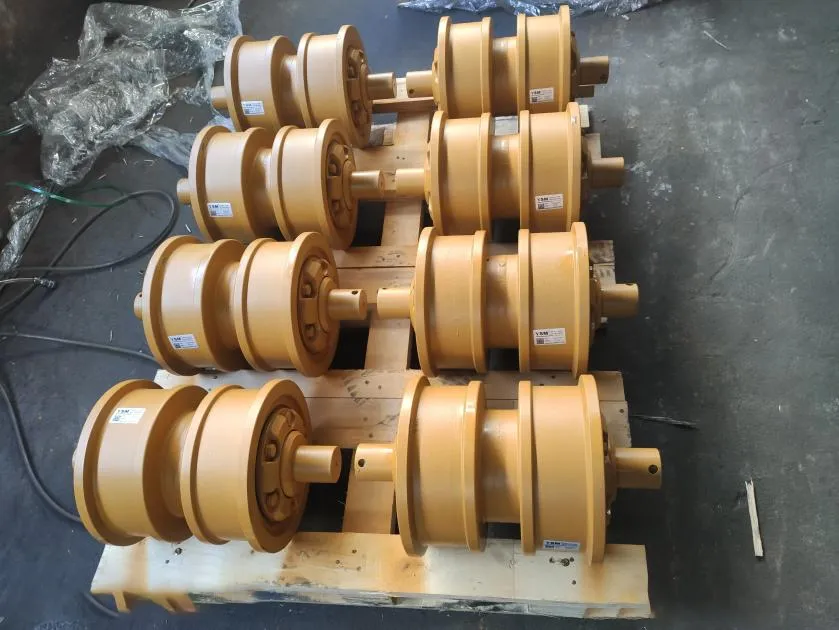
Bottom rollers carry the excavator’s weight on the lower track-chain rail. Their shells should rotate as the links pass beneath them. If one shell is locked, sliding contact replaces rolling contact at that position. The result can be localized heat, polishing, scoring and eventually a flat area on the roller tread. The rail may also develop abnormal wear where it repeatedly contacts the stationary roller.
A brief visual observation is not always conclusive. A roller can appear stationary at low travel speed, and mud can hide rotation marks. Some rollers are partly covered by guards. Confirm the symptom under a controlled inspection procedure rather than judging from one video or a dusty surface.
Warning Signs of a Seized or Dragging Track Roller
| Inspection signal | What it may suggest | Why it is not proof by itself |
|---|---|---|
| One roller shell does not visibly rotate | Internal seizure, obstruction or severe drag. | Observation angle, guards, slow speed or surface dirt can hide rotation. |
| Localized heat after short, comparable travel | Increased friction at a roller, joint or misaligned contact point. | Sunlight, braking, ground temperature and nearby components can affect readings. |
| Fresh oil around a seal area | Possible seal damage and lubricant loss. | Water, old residue or oil from another component can migrate onto the roller. |
| Flat or unusually polished tread area | The roller may have dragged on the rail. | Wear shape needs cleaning and full-circumference inspection to confirm. |
| Scraping, squealing or grinding noise | Dry, seized or misaligned undercarriage contact. | Track joints, guards, stones, idlers and sprockets can create similar noise. |
| Repeated flange contact on one side | Alignment, side loading or track-guiding problems. | Slopes and turning habits can also create directional wear. |
The strongest field evidence is a pattern: repeatable non-rotation plus abnormal temperature, leakage, sound or tread damage. Even then, internal condition and the cause of failure require professional confirmation.
Why an Excavator Track Roller May Not Turn
1. Internal bearing or bushing seizure
Internal sliding surfaces can be damaged by lubricant loss, contamination, fatigue or overload. Once friction increases enough, the shell may drag, rotate intermittently or lock. The roller is a sealed heavy component; internal diagnosis is not a routine operator task.
2. Seal damage and lubricant loss
A damaged seal may allow oil to escape and abrasive material or water to enter. Fresh leakage is therefore an important warning sign. However, a dry exterior does not prove the roller still has correct internal lubrication, and old oil residue does not prove an active failure. Clean, recheck and compare with adjacent rollers.
3. Packed mud, stones or frozen material
Material packed around guards, links and rollers can restrict rotation and increase load. In cold conditions, retained moisture and soil can freeze. OEM maintenance guidance consistently emphasizes regular undercarriage cleaning because buildup accelerates wear and can interfere with moving components.
4. Track tension outside the model specification
A track that is too tight increases loading throughout the undercarriage, including rollers, idlers, bushings and drive components. A track that is too loose can also produce poor guidance and impact. Do not apply a universal sag value: measurement position, ground condition, track type and approved specification vary by machine.
5. Misalignment or structural damage
A bent track frame, worn guides, loose roller mount, damaged bracket or abnormal idler alignment can place side load on a roller. Replacing only the roller without correcting the geometry may lead to repeated flange wear or another early failure.
6. Operating conditions and impact loading
Rock, demolition debris, abrasive sand, slopes, frequent pivot turns and long travel can raise impact and sliding loads. These conditions do not automatically mean the roller is defective; they are part of the failure investigation and future maintenance plan.
Safe Inspection Sequence for a Track Roller That Is Not Turning
Step 1: Clean and document the undercarriage
Remove packed material with the machine safely parked. Photograph the full left and right undercarriage before focusing on the suspected roller. Note the roller position from the front idler so it can be found again.
Step 2: Compare the suspected roller with its neighbors
Check visible tread condition, seal areas, flange contact and mounting hardware. Look for a wet trail, displaced bracket, missing fastener, cracked guard or metal contact. Inspect the matching position on the opposite side for context, while remembering that terrain can make side-to-side wear different.
Step 3: Observe rotation from a safe position
If the approved site procedure allows a controlled travel observation, use a spotter and remain clear of the machine’s path, pinch points and track. Apply a removable visual reference mark only when it can be done with the machine isolated. Do not reach toward a moving undercarriage.
Step 4: Compare temperature without touching
After a short, repeatable travel condition, a trained technician may compare roller temperatures with a suitable non-contact instrument. Use comparable surfaces, distance and timing. Temperature difference is a screening clue, not a universal pass/fail number.
Step 5: Inspect the full tread circumference
A flat spot can hide at the rail contact. Full inspection or removal may require lifting, track release and stored-energy control. This is qualified service work. Do not rotate, hammer or heat the roller while it is loaded.
Step 6: Check track adjustment and alignment
Follow the exact manual for cleaning, machine position, sag measurement and adjustment. Inspect guides, roller mounts, the idler path and rail-side contact. Record measurements instead of guessing from appearance.
Inspect the Parts That Work With the Roller
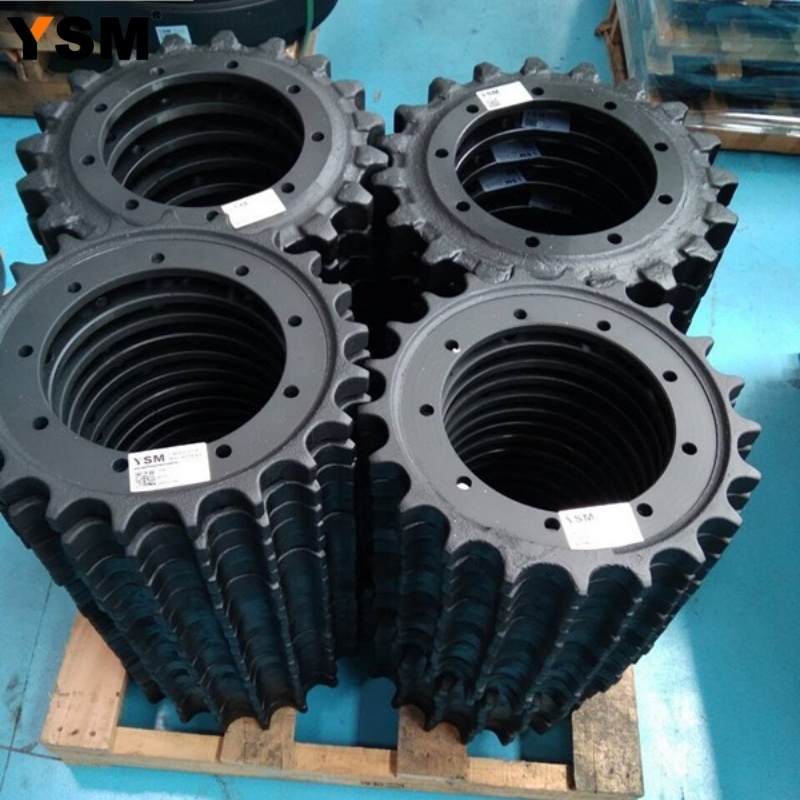
A seized roller can affect more than the roller shell. Inspect the track-chain rail for scoring, localized polishing, spalling and uneven height. Check adjacent roller flanges for directional contact and the shoes and bolts for secondary vibration damage. Review idler and sprocket engagement, guards, frame alignment and track tension.
Deciding whether to replace one roller, several rollers or a larger undercarriage set should be based on measurements and remaining life—not an automatic rule. If adjacent components are near their service limits, a planned system repair may avoid mixing parts with very different wear profiles. If the rest of the system is serviceable and alignment is correct, an isolated replacement may be reasonable after the root cause is addressed.
Keep a dated inspection record with roller position, photos, temperatures or measurements, operating hours and ground conditions. A trend is more useful than one isolated observation, particularly when the symptom is intermittent.
Track Roller Replacement Fitment Checklist
Track rollers that look similar can have different mounting and running dimensions. Provide:
- Equipment brand, complete model and every suffix;
- Serial number or PIN plus a readable nameplate photo;
- Part name and any readable part number;
- Clear side, end, mounting-bracket and overall photos;
- Overall length, tread diameters, flange diameters and flange spacing;
- Bracket width, mounting-hole diameter and center-to-center spacing;
- Roller position and whether the current unit is single- or double-flange;
- Quantity, destination country and working condition.
Do not assume that the same excavator model uses one roller in every serial range or position. Confirm whether the old roller was itself a correct prior replacement. Compatibility and availability must be checked before ordering.
Frequently Asked Questions
Can I keep operating if one track roller is not turning?
Continuing can turn rolling contact into sliding contact and damage the roller and chain rail. If non-rotation is confirmed—especially with heat, leakage, flat spotting or noise—stop and arrange a qualified inspection.
Does a hot roller always mean it is seized?
No. Heat is an inspection signal. Sun exposure, measurement timing, nearby friction and operating conditions can change surface temperature. Compare like surfaces under controlled conditions and investigate the complete pattern.
Can packed mud make a good roller appear seized?
Yes. Packed or frozen material can obstruct movement and hide the shell. Clean the undercarriage safely and recheck. If the roller still does not rotate, further inspection is required.
Can a seized track roller be repaired in place?
It should not be forced, heated or struck while installed and loaded. Roller removal involves a heavy track system and stored-energy hazards. Follow the OEM procedure and use qualified service support.
Should every roller be replaced at the same time?
Not automatically. Measure the full set, inspect alignment and mating rails, and consider remaining service life and operating plan. Replace the parts justified by condition and system compatibility.
Technical References
- Caterpillar: What to Know About Excavator Undercarriage Maintenance — daily inspection, work-condition and track-adjustment context.
- Komatsu undercarriage maintenance tips — cleaning, model-specified adjustment and wear monitoring.
- Volvo CE: How to Inspect Your Machine’s Undercarriage — systematic inspection of top rollers, bottom rollers, links, idlers and sprockets.
- Caterpillar: Best Way to Clean Dozer Tracks — OEM explanation of buildup, freezing and roller seizure risk; used as general tracked-undercarriage context.
Technical references support the inspection principles; the exact service procedure and limits must come from the manual for the specific excavator.
Ask Our Undercarriage Team to Check a Replacement Track Roller
We can review suitable supply options for excavator track rollers and, when inspection shows related wear, carrier rollers, idlers, sprockets, track chains, track shoes, track assemblies and mounting hardware.
Corporate Email: sales@china-ysm.com
WhatsApp: +86-18606961587
For a fitment check, send the brand, complete model and suffix, serial number/PIN, part name and number, clear photos, requested dimensions, quantity, destination country and working condition. Compatibility and availability must be confirmed before ordering.