
Quarry Maintenance | Excavator Undercarriage
Quarry Excavator Undercarriage Maintenance for Rock Work
Quarry excavators work on sharp aggregate, blasted rock, uneven benches and high-impact loading. These conditions can bend shoes, loosen hardware, damage guards, load track joints and create rapid side wear when the machine travels or turns on broken stone. A useful quarry maintenance plan combines safe cleaning, daily impact checks, application-matched shoe selection, repeatable wear measurements and operating habits that reduce avoidable shock.
How Quarry Conditions Change Excavator Undercarriage Wear
| Site condition | Typical loading concern | Inspection priority |
|---|---|---|
| Large angular rock | High point loading, shoe bending, link twisting and guard impact | Cracks, displaced pins, bent shoes, loose hardware and frame damage |
| Fine quarry screenings | Abrasive material can enter contact areas and accelerate external wear | Seal areas, bushing contact, roller tread, rail and sprocket profile |
| Wet clay and crushed stone mix | Packing changes effective track tension and restricts rollers | Clean-out points, roller rotation, idler movement and adjustment |
| Uneven benches and side slopes | Lateral load increases rail-side, flange and guide contact | Left/right comparison, polished sides, idler guidance and guards |
| Frequent relocation | Travel generates sustained contact and heat beyond digging duty | Chain joints, rollers, final-drive exterior, temperature comparison and route planning |
| Breaker or high-impact attachment work | Machine position and repeated shock can increase structural loading | Shoe hardware, track frames, guards, joints and mounting areas |
These are inspection priorities, not automatic diagnoses. A cracked shoe may involve impact, fatigue, loosened hardware, shoe width or previous damage. One hot joint may involve lubrication, stiffness, debris, adjustment or alignment. Confirm the pattern before choosing a repair.
Daily Quarry Excavator Undercarriage Inspection
- Review the shift. Record rock strikes, unusual noise, travel route, side-slope work, derailment, track adjustment and attachment changes.
- Photograph before cleaning. Trapped rock, fresh polishing, oil traces and moved hardware help explain the event.
- Remove large material first. Use approved tools and keep hands away from pinch points. Do not hammer loaded components.
- Clean enough to expose inspection surfaces. Avoid damaging seals with direct high-pressure spray.
- Inspect both sides in the same order. Begin at the idler, follow the lower run to the sprocket, inspect the upper run and repeat on the opposite side.
- Mark and photograph new damage. Use removable markers; do not weld, grind or punch-mark heat-treated track parts.
- Measure repeatably. Record hours, date, material, side, component position and tool with every measurement.
Inspection frequency should increase when impact, travel or utilization increases, but the exact interval must come from the site plan and the machine manual. A single generic service-hour rule does not fit every quarry.
Track-Shoe Width, Flotation and Rock Impact
Track shoes must provide enough flotation and stability for the machine without adding unnecessary leverage. Caterpillar excavator guidance warns that an overly wide shoe on firm rock can transfer additional force into the link and joint area. The practical rule is to use the narrowest shoe that still meets flotation, stability and application requirements for the exact machine.
What to consider before changing shoe width
- machine model, undercarriage configuration and approved shoe options;
- ground bearing strength, bench condition and soft overburden areas;
- rock size, angularity, impact frequency and turning space;
- attachment weight, reach, lifting duty and machine stability requirements;
- track gauge, frame length, guards and transport limits;
- existing chain, shoe bolt pattern and parts compatibility.
Do not reduce shoe width without checking machine stability, and do not install a wider shoe only because it looks more robust. Selection is a machine-and-site decision.
Shoe and hardware inspection
Look for bent plates, cracks from bolt holes or edges, broken grousers, fresh impact marks, loose or missing bolts, elongated holes and fretting at the shoe-to-link seat. One loose shoe can damage the mounting surfaces and allow repeated movement under rock impact.
Quarry Undercarriage Component Checks
| Component | Quarry inspection focus | Why it matters |
|---|---|---|
| Links, pins and bushings | Cracks, stiff joints, displaced retention, dry-joint clues, rail wear and side polishing | High impact and twisting load the complete chain system |
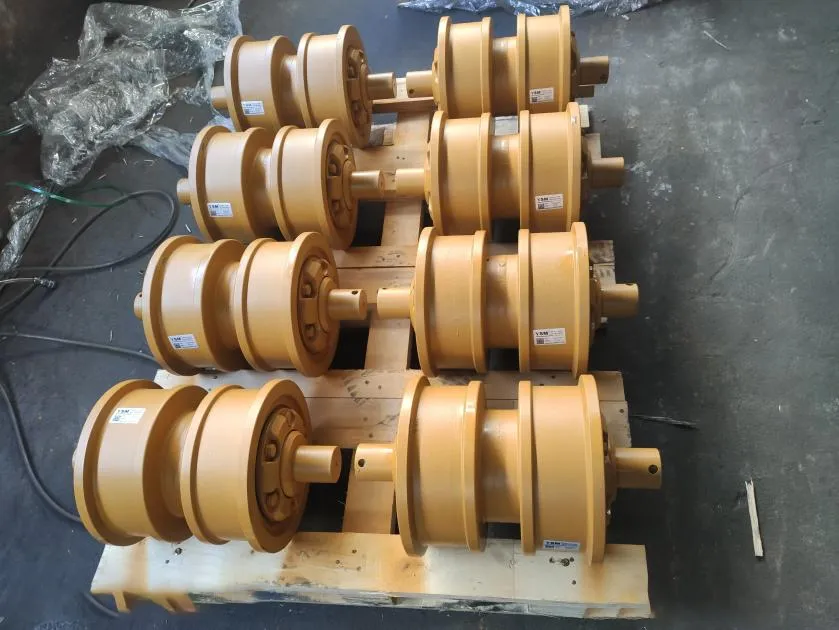
| Lower track rollers | Leakage, shell cracks, flat spots, seized rotation, flange contact and rock packing | Restricted support shifts load to neighbouring rollers and link rails |
| Carrier rollers | Leakage, upper-chain contact, rotation and trapped aggregate on frame ledges | Rock can restrict the upper chain path and create repeated contact |
| Front idler | Tread and flange wear, leakage, guide position, rock damage and abnormal movement | Idler guidance affects alignment and track retention |
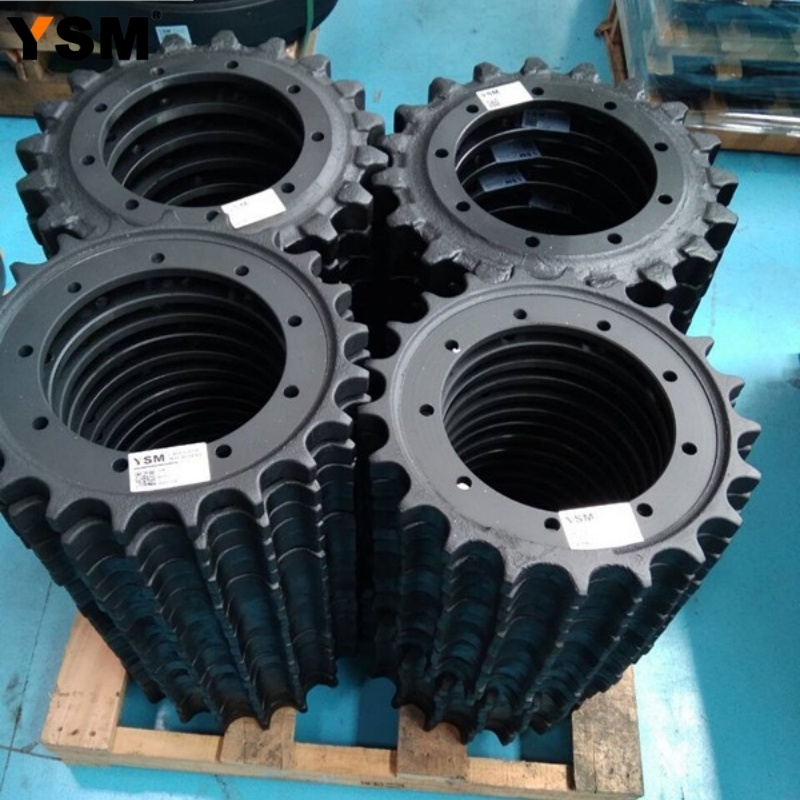
| Sprocket | Tooth profile, cracks, bushing contact, packed stone and mounting security | Drives directly against bushings under travel load |
| Adjuster and recoil area | Grease leakage, damaged access covers, blocked movement and repeated loss of setting | Track adjustment changes with packing, wear and system condition |
| Guards and track frame | Bending, cracks, loose bolts, fresh rubbing and trapped rocks | Protection that is damaged or packed can become a contact point |
| Final-drive exterior | Leakage, impact damage, loose mounting and comparative heat | Rock strike evidence requires qualified follow-up |
Full-length guards may be appropriate for some configurations, but they are not a substitute for cleaning. Guard design, site material and service access must be considered together.
Operating Habits That Reduce Avoidable Rock Damage
Limit unnecessary travel
Tracked travel over sharp rock creates repeated contact cycles and heat. Position the machine and plan haul support so the excavator does not travel farther than the work requires. Use approved transport for relocation beyond the intended tracked-travel duty.
Use smooth turns where the site allows
Sharp counter-rotation on high-traction rock increases lateral loading and shoe scuffing. Wider, gradual turns can reduce avoidable side stress when space and safety permit.
Manage slopes and bench edges
Cross-slope work shifts load toward roller flanges, link sides and guides. Prepare stable working pads, follow site geotechnical controls and avoid operating near unsupported edges.
Keep the work over the appropriate end
Caterpillar maintenance guidance recommends digging toward the idlers rather than repeatedly working back over the drive end. Follow the exact machine guidance and plan the setup to reduce unnecessary loading over the sprocket area.
Do not use the track as a rock breaker
Avoid deliberately driving over large angular rocks to crush or move them. Clear the travel path with suitable equipment and keep large stone out of sprocket and guard areas.
Measure Wear and Plan Quarry Replacement
Quarry wear should be trended rather than judged only after visible failure. Record approved chain pitch or link dimensions, rail height, bushing condition, roller and idler measurements, sprocket profile, grouser height, shoe damage, track adjustment and side-contact patterns.
Compare measurements with the correct serial-specific reference and keep the site material and operating hours with each inspection. An ultrasonic or dealer measurement program can help document remaining wear material where visual inspection is insufficient.
Replacement planning should treat mating components as a system. A new chain may not engage correctly with badly worn sprockets, and one new roller may not solve an alignment or packing problem. The scope may be one damaged part, one side or a broader group, depending on measured condition and the next quarry duty.
After replacement
- verify every installed part number and position;
- set track adjustment by the exact manual and ground condition;
- follow approved hardware tightening and reinspection procedures;
- monitor early contact, leakage and heat patterns;
- update the wear baseline and next inspection trigger.
Quarry Excavator Undercarriage Parts Fitment Checklist
For track rollers, carrier rollers, idlers, sprockets, track chains, track shoes, track assemblies, adjuster-related parts or track fasteners, send:
- equipment brand, complete model and every suffix;
- serial number or PIN and a clear identification-plate photo;
- part name, quantity and all readable current part numbers;
- full left and right undercarriage photographs;
- requested dimensions measured with the agreed method;
- link count, shoe width, bolt pattern and track pitch where relevant;
- guard configuration and any previous undercarriage conversion;
- rock type, average fragment size, moisture, slopes, travel and impact duty;
- destination country and planned service objective.
Descriptions such as "quarry type" or "heavy duty" do not confirm fitment. The machine identity, dimensions, part relationship and actual application must agree.
Frequently Asked Questions
Are wider excavator track shoes better in a quarry?
Not automatically. Wide shoes can improve flotation but may increase leverage and link loading on firm rock. Use the narrowest approved shoe that still meets stability and flotation needs.
How often should a quarry undercarriage be cleaned?
Inspect and remove damaging material as site conditions require, including after heavy packing or rock entry. The exact routine depends on utilization, material and the machine manual.
Does one cracked shoe mean the whole track must be replaced?
No automatic rule applies. Inspect the crack, mounting surfaces, neighbouring shoes, chain, hardware, impact history and total wear before selecting repair scope.
Can track tension be set with a generic quarry value?
No. Use the exact model manual, measurement method and ground condition. Packing can change effective tension during work.
What quarry information helps parts selection?
Provide rock type and size, moisture, impact level, travel distance, slope, attachment, machine configuration and the complete fitment data.
Technical References
- Caterpillar: Excavator Undercarriage Maintenance - daily component checks, shoe width, rock conditions and working direction.
- Caterpillar: Undercarriage for Excavators - high-impact applications and system selection.
- Caterpillar OEM Solutions: Undercarriage Applications - quarry context, shoe configurations and environment-dependent wear.
- Komatsu: Loading Tool Selection Guide - narrow-shoe durability principle and site-specific selection.
- Volvo Construction Equipment: EC950E Product Guide - quarry configuration, underside protection and track-guard context.
This article provides general quarry maintenance guidance. Exact shoe choice, track adjustment, wear limits, guard configuration, lifting and repair procedures must come from the correct serial-specific operation and service information.
Ask About Excavator Undercarriage Parts for Quarry Work
We can check suitable supply options for track rollers, carrier rollers, idlers, sprockets, track chains, track shoes, track assemblies, adjuster-related components and track fasteners after reviewing the exact machine and quarry application.
Corporate Email: sales@china-ysm.com
WhatsApp: +86-18606961587
For a fitment check, send the equipment brand, complete model and suffix, serial number or PIN, part name, part number, clear photos, requested dimensions, quantity, destination country and working condition. Compatibility and availability must be confirmed before ordering.