
-
-
ApplicationOur products consist of undercarriage parts for bulldozer and excavator such as Track link,Track roller,Carrier roller,Sprocket,ldler,Track shoe,Cutting edge,End bit,Tooth Bucket,Track pin,Track bush, Engine parts,Track boit&nuts.U-bolt,Centre bolt,Wheel bolt and other related parts.

-
About UsFujian Yongsheng Machinery Parts Co., Ltd. is located in Quanzhou City, Fujian Province, which is one of the most developed regions of China Machinery Manufacturing.The company was established in 2003, after approximately 10years' effort, and now it is one of the leading construction machinery parts auto parts manufacturers in CHINA.
-
BlogSuppliers who pass Quality ManagementSystem Certification, and have onsitematerials or finished products inspected,as certified by independent third parties.
The Complete Guide to Excavator Idlers: Maintenance, Selection, and Cost Optimization
Comprehensive guide to excavator idlers for B2B procurement. Learn about materials, failure diagnosis, and OEM vs aftermarket comparisons to reduce undercarriage maintenance costs.
Jul 06,2026
The Complete Guide to Excavator Idlers: Maintenance, Selection, and Cost Optimization for Fleet Operators
For procurement managers and heavy equipment operators, the undercarriage represents up to 50% of total machine maintenance costs. Among the critical components, excavator idlers play a fundamental but often overlooked role in track system performance. Understanding how these components function, recognizing failure signals early, and making informed procurement decisions directly impacts your fleet's operational efficiency and bottom line.
Part 1: Understanding Excavator Idlers
Idlers (also called guide rollers or track idlers) are cylindrical components mounted at the front or rear of an excavator's undercarriage that support and guide the track chain. Unlike bottom rollers (which carry weight) and sprockets (which drive movement), idlers are designed to maintain track tension and ensure proper track alignment during operation.
Key Functions:
- Track Tensioning: Maintains optimal tension in the track chain to prevent derailment
- Track Alignment: Keeps the track centered on the undercarriage frame
- Lateral Support: Prevents sideways track drift during turning and cornering
- Wear Distribution: Reduces stress concentration on individual track links
- Vibration Dampening: Absorbs shock loads during rough terrain operation
While a track idler assembly for sale may seem like a simple commodity, its engineering significantly affects machine longevity. Choosing quality idlers is as critical as selecting bottom rollers or sprockets.
Part 2: How Idlers Work & Load Distribution Mechanics
Idlers operate under both static and dynamic loading. The static load comes from the machine's weight distributed across the undercarriage, while dynamic loads result from acceleration, deceleration, and turning forces.
Static vs Dynamic Loading:
A 30-ton excavator distributes approximately 15 tons across each side's undercarriage. This weight is supported by track rollers, but the idler must guide the track properly to prevent uneven weight distribution. When the machine turns, the inside track reduces tension while the outside track increases tension. The idler must accommodate this changing tension without slipping.
Poor-quality idlers exhibit signs of excavator idler failure within the first few hundred hours: excessive vibration, track creep, or premature wear on adjacent components. Quality idlers maintain track alignment under these demanding conditions for thousands of operating hours.
Part 3: Idler Types & Design Variations
Excavator idlers come in several configurations, each optimized for specific operational scenarios:
Standard Idlers
Designed for general construction and demolition work. Suitable for machines up to 25 tons. Standard idlers offer adequate performance in predictable soil conditions.
Heavy-Duty Idlers
Engineered for extreme environments—quarries, mining operations, and rocky terrain. These idlers feature enhanced bearing protection and reinforced mounting systems to withstand continuous high-load operation.
Standard vs. Heavy-Duty Idler Comparison
| Feature | Standard Idler | Heavy-Duty Idler |
|---|---|---|
| Material Grade | Medium-carbon steel (40Mn / 50Mn) | Boron alloy steel (35MnB / 25MnB) |
| Bearing Type | Standard deep-groove ball bearings | Premium sealed roller bearings |
| Seal System | Single nitrile lip seal | Double FKM seals + labyrinth |
| Service Life | 1,500-2,500 hours | 3,500-5,500+ hours |
| Load Rating | Up to 25 tons | 30+ tons |
| Typical Cost | $80-$250 per unit | $250-$500+ per unit |
| Cost Per Hour | $0.032-$0.167/hour | $0.045-$0.143/hour |
Part 4: Material Science & Durability Engineering
The performance difference between cheap and premium idlers is rooted in material composition and heat treatment. Understanding excavator idler material types helps procurement teams make value-based decisions rather than price-based decisions.
Casting vs. Forging: The Manufacturing Debate
The choice between excavator front idler casting vs forging significantly impacts durability:
Cast Idlers: Manufactured by pouring molten steel into molds. Casting is faster and cheaper, but creates internal porosity and grain irregularities. These defects become stress concentration points where cracks initiate.
Forged Idlers: Manufactured by hammering heated steel into shape. Forging aligns the metal grain structure along stress lines, dramatically improving fatigue resistance. Forged components typically outlast cast versions by 50-100%.
Heat Treatment & Hardness
Whether cast or forged, idlers undergo heat treatment to achieve optimal hardness. Induction hardening—heating the outer surface to 900°C then cooling rapidly—creates a hardened case (HRC 52-58) while maintaining a tough core.
Case Depth Matters: A deeper hardened case (10-15mm) resists wear longer than a shallow case (5-8mm). Quality manufacturers invest in deep case hardening; budget manufacturers use shallow cases to reduce costs.
Part 5: Failure Signs & Maintenance Strategy
Early diagnosis of idler wear prevents costly undercarriage failures. Fleet operators using an excavator idler maintenance guide can schedule preventive replacement before catastrophic failure occurs.
Diagnostic Guide: Reading Failure Patterns
| Failure Pattern | Root Cause | Action Required |
|---|---|---|
| Vibration at idle | Bearing wear or improper track tension | Inspect idler for bearing play. Check track tension. |
| Track creep (slippage) | Idler slipping on track due to insufficient tension or bearing failure | Adjust idler tension or replace if bearing is damaged. |
| Uneven track wear on one side | Misaligned idler causing lateral track drift | Check frame geometry. May need idler replacement. |
| Grinding noise during operation | Bearing failure or seized roller | Immediate replacement required. Bearing cannot be relubricated. |
| Seepage of grease around idler mounting | Seal failure allowing bearing lubricant to escape | Replace idler. Bearing failure is imminent. |
Part 6: Idler vs Carrier Roller vs Track Rollers—Understanding the Difference
Many procurement teams confuse these three distinct components. Clarifying the differences prevents purchasing the wrong parts. A track idler vs carrier roller comparison highlights their different roles:
Track Idlers (Front/Rear Guides): Support and guide the track chain at the front or rear of the machine. Optimized for tensioning and alignment. Lower load rating than track rollers.
Carrier Rollers (Top Roller Support): Located under the top run of the track chain, supporting weight from above. Smaller diameter than track rollers, operate at lower loads.
Track Rollers (Bottom Support): Located under the bottom run of the track chain, bearing most of the machine's weight. Largest diameter, highest load rating. Most frequently replaced component.
Part 7: OEM vs. Aftermarket Idlers
The decision between OEM and aftermarket idlers is one of the most impactful procurement choices. Understanding OEM vs aftermarket track idler cost in the context of total cost of ownership reveals the true economics.
OEM Idlers: Premium Cost, Guaranteed Compatibility
Advantages:
- 100% certified compatibility with original equipment
- Warranty coverage from equipment manufacturer
- Consistent quality across all production batches
- Available through established distribution networks
Disadvantages:
- Premium pricing (3-4x higher than quality aftermarket)
- Longer lead times due to supply chain
- Over-engineered for standard applications (you pay for durability you don't need)
Aftermarket Idlers: Cost Savings with Risk Management
Advantages:
- Significant cost savings (40-60% vs OEM)
- Faster availability from local/regional suppliers
- Access to specialized materials and heat treatment options
- Better margins for parts resellers
Disadvantages:
- Quality varies significantly between suppliers
- Some aftermarket idlers fail within 500 hours
- Dimensional tolerances may cause installation issues
- No equipment manufacturer warranty coverage
The Smart Procurement Strategy
Leading fleet operators use a Certified Aftermarket approach: sourcing from quality manufacturers who:
- Perform reverse-engineering to achieve OEM specifications
- Use equivalent or superior material grades (boron steel, premium bearings)
- Implement rigorous quality testing (ultrasonic inspection, dimensional verification)
- Offer 12-24 month warranties backed by industry reputation
- Provide technical support and customization for specific models
This approach achieves 50%+ cost savings while maintaining reliability standards comparable to OEM parts.
Part 8: Selection Guide for Different Excavator Models
When searching for buy excavator idler for CAT 320 or other specific models, understanding the selection criteria ensures you purchase correctly the first time.
Key Selection Parameters:
- Machine Size & Weight: Heavier machines require idlers with higher load ratings
- Operating Environment:
- General Construction: Standard idlers (40Mn/50Mn)
- Quarries/Rocky Terrain: Heavy-duty idlers (35MnB/25MnB)
- Extreme Cold/Heat: Special sealing and material options
- Operating Hours per Year: High-utilization machines benefit from premium idlers with longer service life
- Supply Chain Reliability: Establish relationships with wholesale excavator idler manufacturers that can guarantee consistent delivery
Part 9: YSM Factory Idler Solutions
YSM Factory specializes in manufacturing excavator idlers that bridge the gap between OEM quality and aftermarket pricing. Our idlers are engineered for global B2B procurement managers, parts agents, and fleet operators who demand reliability without excessive cost.
Our Manufacturing Advantage:
- Precision Forging: All idler bodies are forged to align grain structure with load paths, not cast
- Premium Materials: Exclusively using boron-enhanced alloy steel (35MnB/25MnB) for superior fatigue resistance
- Advanced Heat Treatment: Deep induction hardening (10-15mm case depth) with rigorous hardness verification
- Quality Testing: Every unit undergoes ultrasonic inspection and dimensional verification before shipment
- Customization: OEM/ODM programs available for parts agents requiring branded solutions
- Technical Support: Application engineering and customized solutions for specialized requirements
When you search for heavy equipment idler suppliers near me, you want a partner who understands your specific operational challenges and can deliver solutions—not just parts. YSM Factory is that partner, offering the expertise of a quality manufacturer with the responsiveness of a local supplier through our global distribution network.
Invest in quality. Lower your costs. Maximize your uptime.
Contact Our Technical Team
For a free application assessment, sample request, or technical consultation:
Email: sales@china-ysm.com
Phone: +86-18606961587
We're committed to helping you optimize your undercarriage performance and reduce operational costs.
Related Posts
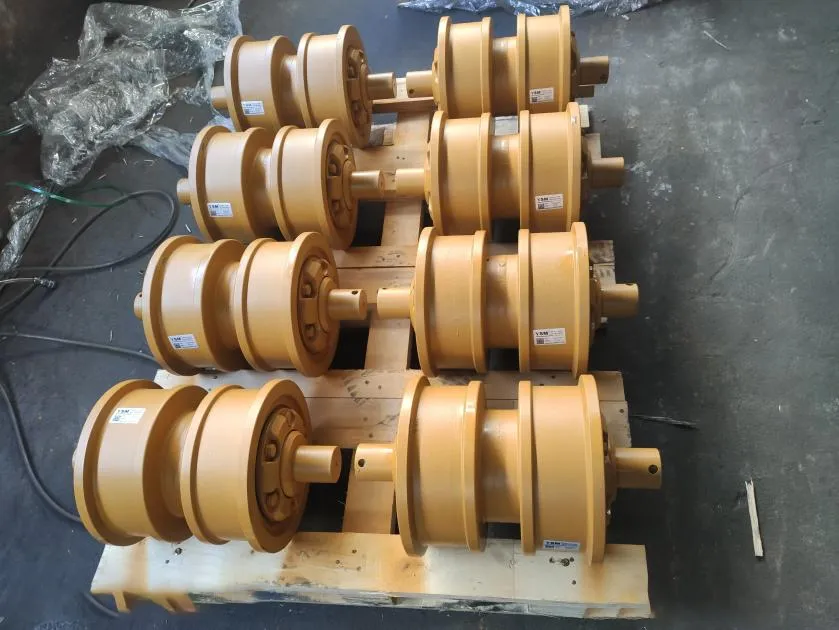
How Should The Supporting Wheels Be Selected To Avoid Stepping On Thunder?
High-quality support wheels mainly depend on the performance of its steel. The material of the roller body is generally 50Mn, 40Mn2, (MN: synonymous with the element of manganese).
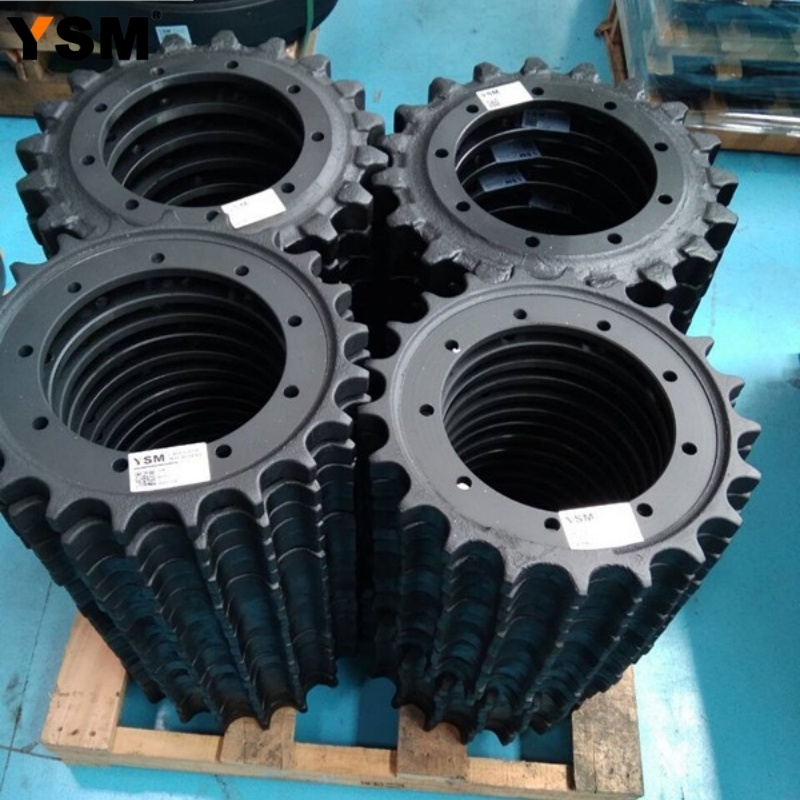
Carrier Wheels Are Suitable For Various Models At Home And Abroad
Sprocket wheels are mainly used in various crawler bulldozers, excavators, pavers, milling machines, rotary drilling rigs or other crawler machinery equipment at home and abroad.
Contact Us
E-mail :
sales@china-ysm.com
Phone/WhatsApp:
+86-18606961587
Address:
No.8 Binjiang Street, Binjiang Industrial Zone, Xiamei Town, Nan An City, Quanzhou City, Fujian Province, China
Request Quote
Andy Shi
No.8 Binjiang Street, Binjiang Industrial Zone, Xiamei Town, Nan An City, Quanzhou City, Fujian Province, China


Request Quote