-
-
ApplicationOur products consist of undercarriage parts for bulldozer and excavator such as Track link,Track roller,Carrier roller,Sprocket,ldler,Track shoe,Cutting edge,End bit,Tooth Bucket,Track pin,Track bush, Engine parts,Track boit&nuts.U-bolt,Centre bolt,Wheel bolt and other related parts.

-
About UsFujian Yongsheng Machinery Parts Co., Ltd. is located in Quanzhou City, Fujian Province, which is one of the most developed regions of China Machinery Manufacturing.The company was established in 2003, after approximately 10years' effort, and now it is one of the leading construction machinery parts auto parts manufacturers in CHINA.
-
BlogSuppliers who pass Quality ManagementSystem Certification, and have onsitematerials or finished products inspected,as certified by independent third parties.
The Ultimate Guide to Excavator Track Rollers: Durability, Maintenance, and Selection
Comprehensive B2B guide on excavator track rollers. Learn about material science, wear patterns, and OEM vs aftermarket comparisons to optimize undercarriage performance.
Jul 06,2026
The Ultimate Guide to Excavator Track Rollers: Maximizing Durability and Reducing Total Cost of Ownership
For procurement managers and heavy equipment parts agents, the undercarriage represents nearly 50% of an excavator's lifetime maintenance costs. Among the critical components, track rollers (also known as bottom rollers) play a pivotal role in supporting the machine's weight and guiding the track chain. Understanding the technical nuances of these components is not just about maintenance; it is a strategic approach to supply chain stability and operational efficiency.
Part 1: Understanding Excavator Track Rollers
Track rollers are cylindrical components mounted on the excavator's undercarriage frame that support the weight of the machine and guide the movement of the track chain. Unlike idlers (which support the track at the top) and sprockets (which drive the chain), track rollers are positioned at regular intervals along the undercarriage's sides, bearing the full static and dynamic load.
Key Design Parameters:
- Bore Diameter: Typically ranges from 60mm to 200mm depending on machine size
- Outer Diameter: Determines load-bearing capacity and ground clearance
- Width: Matches the track chain width for seamless integration
- Load Rating: Expressed in tonnes, varies with material grade and heat treatment
- Seal Type: Single or double-lip seals to prevent contamination from mud and abrasives
For operators searching for mini excavator track rollers for sale, understanding these specifications ensures compatibility with machines ranging from 1.5-ton mini excavators to 50+ ton heavy-duty models.
Part 2: How Track Rollers Work & Engineering Principles
Track rollers function under constant pressure, supporting not just the machine's weight but also dynamic forces during acceleration, deceleration, and directional changes. The engineering challenge is to maximize the load-bearing capacity while minimizing friction and wear.
The Load Distribution Mechanism:
When an excavator turns, the track on the inside of the turn experiences reduced tension while the outside track increases tension. This asymmetrical loading is distributed across multiple rollers, creating localized stress points. Superior excavator track rollers price reflects engineering quality—cheaper rollers fail prematurely under these cyclic stresses.
The contact patch (the area where the roller touches the track chain) must be precisely engineered to distribute pressure evenly. If the contact patch is too small, stress concentration accelerates wear. If too large, the roller becomes unnecessarily heavy and increases fuel consumption.
Part 3: Types of Excavator Track Rollers
Excavator track rollers are categorized by design type and material specification:
Standard vs. Heavy-Duty Rollers
Standard Rollers: Suitable for typical construction and demolition work. Load ratings typically between 20-50 tonnes per roller.
Heavy-Duty Rollers: Engineered for extreme environments—quarrying, mining, and rocky terrain. Load ratings exceed 60 tonnes with specialized heat treatment for impact resistance.
Standard vs. Heavy-Duty Comparison
| Feature | Standard Roller | Heavy-Duty Roller |
|---|---|---|
| Material Grade | 40Mn / 50Mn (Medium carbon steel) | 35MnB / 25MnB (Boron-enhanced alloy) |
| Hardness (HRC) | 48-52 HRC | 55-60 HRC |
| Load Rating | 20-50 tonnes | 60-100+ tonnes |
| Service Life | 1,500-2,500 operating hours | 3,000-5,000+ operating hours |
| Typical Cost | $150-$400 per unit | $400-$800+ per unit |
| Seal Type | Single-lip nitrile seal | Double-lip FKM seal + labyrinth |
| Best For | General construction, soft soil | Quarries, rocky terrain, extreme conditions |
Part 4: Material Science & Durability
The primary failure mode of track rollers is surface fatigue and spalling—progressive pitting and flaking of the bearing surface. This is caused by cyclic contact stresses exceeding the material's fatigue strength. Understanding material composition and heat treatment is critical to evaluating track roller replacement cost versus long-term value.
Material Grades & Heat Treatment
40Mn Steel: A medium-carbon alloy containing 0.4% manganese. When quenched and tempered, achieves 48-52 HRC. Suitable for standard applications with predictable loading.
50Mn Steel: Higher carbon content improves hardness to 50-54 HRC. Better fatigue resistance than 40Mn, suitable for heavy-duty operations.
35MnB & 25MnB (Boron Steel): Boron enhances hardenability and fracture toughness. These grades can achieve 55-60 HRC while maintaining shock resistance. Critical for extreme environments where brittleness must be minimized.
Heat Treatment Process:
- Induction Hardening: Selective hardening of the outer surface to HRC 55-60 while maintaining a tougher core (HRC 35-45). This creates a wear-resistant surface with impact-absorbing interior.
- Tempering: Relieves internal stresses and improves toughness, preventing brittle failure.
- Case Depth: Typically 5-12mm. Deeper cases increase service life but are more expensive to produce.
Part 5: Identifying Wear Patterns & Maintenance Strategy
Effective procurement requires the ability to diagnose roller degradation before catastrophic failure. This skill directly reduces excavator undercarriage maintenance checklist costs.
Reading Track Roller Wear Patterns
A track roller wear patterns guide shows that wear is not uniform. Different failure signatures indicate different root causes:
| Wear Pattern | Root Cause | Solution |
|---|---|---|
| Even Surface Wear | Normal usage. Predictable degradation. | Schedule replacement at 2,500 hours. Reduce frequency if soil is abrasive. |
| Pitting/Spalling | Stress overload or low-quality material. Surface fatigue. | Upgrade to heavy-duty grade. Check track tension (may be over-tightened). |
| One-Sided Edge Wear | Misaligned track chain. Roller is not perpendicular to ground. | Inspect frame geometry. May require frame straightening. Replace roller once alignment is corrected. |
| Glazing (Shiny Polished Surface) | Excessive heat from friction. Usually indicates poor lubrication or track bind. | Inspect seals. Relubricate or replace if seals are compromised. |
| Cracking/Fracture | Material defect or extreme impact loading. Critical failure. | Immediate replacement required. Inspect for underlying frame damage. |
Part 6: OEM vs. Aftermarket Track Rollers
One of the most critical decisions in procurement is the OEM vs aftermarket track rollers comparison. This choice affects both immediate costs and long-term operational reliability.
OEM Rollers: Premium Price, Guaranteed Compatibility
Advantages:
- 100% dimensional compatibility with original equipment
- Factory-tested and certified to withstand original design loads
- Consistent quality control across production batches
- Warranty coverage from equipment manufacturer
Disadvantages:
- Premium pricing (typically 2-3x higher than aftermarket equivalents)
- Longer lead times due to distribution networks
- OEM parts may be over-engineered for standard applications
Aftermarket Rollers: Cost Efficiency vs. Risk
Advantages:
- Significantly lower cost (40-60% savings versus OEM)
- Faster availability from local suppliers
- Competitive incentives for bulk orders
- Access to specialized materials (boron steel, ceramic coatings)
Disadvantages:
- Quality variance between suppliers. Some aftermarket parts fail prematurely.
- Dimensional tolerances may be slightly off, causing tracking issues
- Material composition may not match original specifications
- No warranty coverage from equipment manufacturer
The Smart Middle Ground: Certified Aftermarket
Leading global procurement managers are turning to certified aftermarket suppliers that:
- Reverse-engineer OEM parts to exact specifications
- Use equivalent or superior material grades
- Implement rigorous quality testing (ultrasonic inspection, dimensional checks)
- Offer competitive warranties (12-24 months) backed by industry reputation
- Provide technical support and customized solutions
Part 7: Track Roller Selection Guide for Different Applications
Choosing the right track roller requires matching the component to specific operational conditions. Here's a practical selection matrix:
Selection Criteria
- Machine Weight: As machines get larger, the load per roller increases exponentially. Ensure the roller's static and dynamic load ratings are compatible.
- Operating Environment:
- Soft Soil (Construction Sites): Standard 40Mn/50Mn rollers sufficient. Prioritize cost efficiency.
- Rocky/Quarry Operations: Heavy-duty 35MnB/25MnB rollers mandatory. Extended case depth (8-12mm) recommended.
- Extreme Cold/Hot Climates: Specialized grades with impact-resistant cores. FKM seals for temperature stability.
- Maintenance Capability: If field maintenance is limited, choose premium rollers with longer service intervals. If frequent replacements are expected, cost-effective standard rollers may be acceptable.
- Supply Chain Stability: For critical operations, establish relationships with suppliers who can guarantee consistent quality and delivery. Single-source dependency is risky.
For those managing smaller fleets, searching for mini excavator track rollers for sale often leads to generic results. It is better to partner with a supplier that offers customized solutions for specific brands like Komatsu, Caterpillar, or Hitachi, ensuring that the mounting dimensions are exact to the millimeter.
Part 8: YSM Factory Track Roller Solutions
At YSM Factory, we specialize in bridging the gap between high-cost OEM parts and low-quality aftermarket alternatives. Our track rollers are engineered with a focus on three pillars: Precision, Durability, and Reliability.
We utilize advanced induction hardening technology and high-precision CNC machining to ensure every roller meets strict tolerances. Our supply chain is designed for stability, offering worldwide shipping and customized OEM/ODM services for parts agents who require their own branding. By choosing YSM, you are not just buying a part; you are investing in a partnership that aims to lower your total undercarriage maintenance costs through superior engineering and competitive pricing.
Invest in quality. Lower your costs. Maximize your uptime.
Contact Our Technical Team
For a free application assessment, sample request, or technical consultation:
Email: sales@china-ysm.com
Phone: +86-18606961587
We're committed to helping you optimize your undercarriage performance and reduce operational costs.
Related Posts
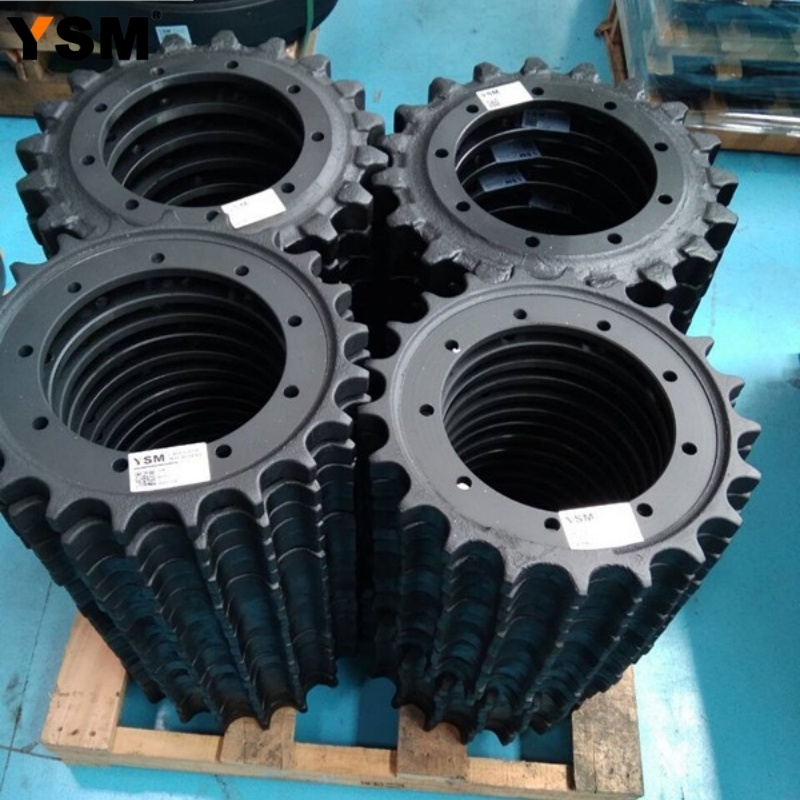
How Should The Supporting Wheels Be Selected To Avoid Stepping On Thunder?
High-quality support wheels mainly depend on the performance of its steel. The material of the roller body is generally 50Mn, 40Mn2, (MN: synonymous with the element of manganese).
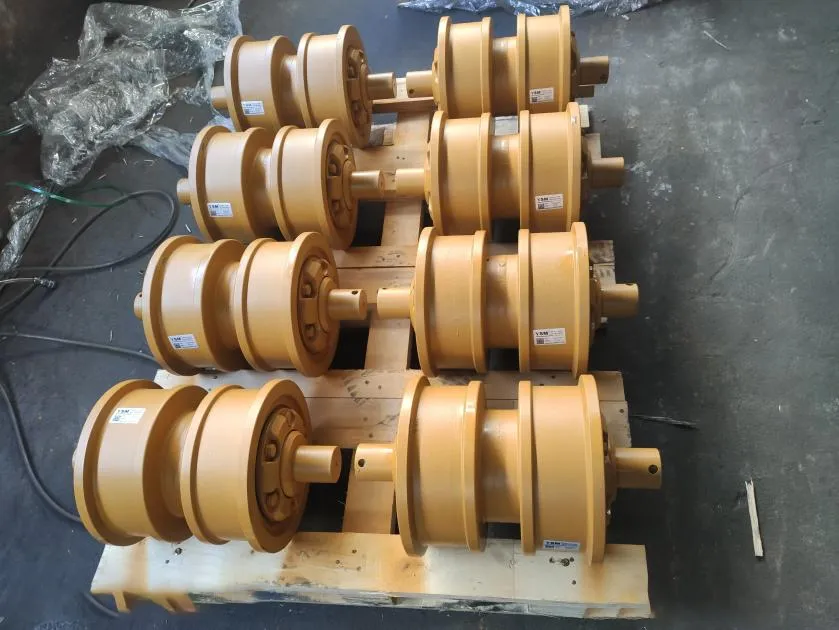
Carrier Wheels Are Suitable For Various Models At Home And Abroad
Sprocket wheels are mainly used in various crawler bulldozers, excavators, pavers, milling machines, rotary drilling rigs or other crawler machinery equipment at home and abroad.
Contact Us
E-mail :
sales@china-ysm.com
Phone/WhatsApp:
+86-18606961587
Address:
No.8 Binjiang Street, Binjiang Industrial Zone, Xiamei Town, Nan An City, Quanzhou City, Fujian Province, China
Request Quote
Andy Shi
No.8 Binjiang Street, Binjiang Industrial Zone, Xiamei Town, Nan An City, Quanzhou City, Fujian Province, China


Request Quote