
Bulldozer Undercarriage Troubleshooting
Why Bulldozer Undercarriage Wears Unevenly: 7 Causes to Check
When one side, one roller position or one edge of a dozer track wears faster, the visible part is not always the root cause. Operating pattern, slope work, track tension, packing, alignment and mismatched wear can all change how the undercarriage carries load.
Quick Answer
Uneven bulldozer undercarriage wear commonly develops when the machine repeatedly turns in one direction, works across slopes, carries an unbalanced blade load, runs with unequal track tension, operates with packed debris, has an alignment or guiding problem, or combines components with different wear conditions. A wear pattern is evidence for further inspection—not proof of one failed part. Compare both sides, measure the same locations and review how the machine actually works before replacing components.
Safety Before Inspection
Park on firm, level ground where possible, lower the blade and ripper, apply the parking brake, isolate the machine and follow the Operation and Maintenance Manual. Do not enter a pinch point, release track-adjuster grease pressure, work under an unsupported machine or rotate a raised track unless qualified personnel are using an approved procedure.
What Does Uneven Bulldozer Undercarriage Wear Look Like?
Uneven wear is any measurable difference that cannot be explained only by normal component position and design. It may appear between the left and right track systems, between the front and rear rollers, across the width of a roller or idler, or between the two flanks of a sprocket tooth.
| Observed pattern | Possible influences | Useful comparison |
|---|---|---|
| One complete side wears faster | Repeated same-direction turns, side-hill loading, unequal track tension, different ground contact or alignment | Left/right chain, roller, idler and sprocket measurements plus operating route |
| One roller flange or one side of a link rail is polished heavily | Side loading, idler guidance, frame alignment, bent guards or a snaking track | Chain running path and flange clearance at several positions |
| Front rollers wear differently from rear rollers | Blade loading, balance, carry work, terrain and normal load distribution | Same roller positions on both sides and the machine's main application |
| Bushings and sprocket teeth show directional wear | Travel direction, reverse operation, pitch wear and engagement condition | Both tooth flanks, bushing contact surfaces and measured chain pitch |
| One component develops local heat, leakage or a flat spot | Internal roller or idler condition, seal failure, debris restriction or impact damage | Adjacent components and the same position on the opposite track frame |
Position matters. The first and last rollers may not carry exactly the same load as center rollers, and different dozer designs distribute load differently. Use the correct wear chart rather than assuming every measured difference is abnormal.
7 Causes of Uneven Bulldozer Undercarriage Wear
1. Repeated Turning in the Same Direction
A dozer that repeatedly turns toward the same side does not load both track systems equally. Pivot turns, counter-rotation and track spin can increase sliding and side load. Over time, the preferred turning direction may appear as faster wear on one side, particularly on links, roller flanges, idler flanges, bushings and sprocket contact surfaces.
Check: Compare operator habits, site layout and left/right wear records. Where the job allows, use wider turns, reduce unnecessary pivoting and balance turning direction.
2. Side-Hill Work or an Unbalanced Blade Load
Working across a slope moves load toward the downhill side and can push the chain laterally against guiding surfaces. Repeatedly approaching a pile with the same blade corner or carrying material with an uneven load can also concentrate weight on one track.
Check: Record slope direction, blade-loading pattern and whether the machine normally enters or exits the work area on the same side. When the operation permits, work more directly up and down slopes and avoid unnecessary turning on the hillside.
3. Unequal or Incorrect Track Tension
Track tension affects the load carried by chains, bushings, rollers, idlers and sprockets. A track that is too tight can increase friction and component load. A track that is too loose may slap, snake or engage poorly. If the left and right sides are adjusted differently, wear can progress at different rates.
Check: Measure both tracks using the method specified for the exact dozer and undercarriage type. Machines with and without carrier rollers may use different measurement positions. Never apply one universal sag value.
4. Mud, Clay, Stones or Frozen Packing
Packed material can effectively tighten a track, prevent a carrier roller from rotating, force the chain away from its normal path or hide loose hardware and leakage. If one side of the machine repeatedly works against a bank or windrow, debris accumulation may also be heavier on that side.
Check: Clean the track frames, rollers, idlers, link pockets and guards using an approved method. Compare both sides before making measurements, because packed material can change the apparent condition.
5. Idler, Roller, Guard or Track-Frame Alignment Problems
The chain should follow a controlled path between the idler, rollers and sprocket. Worn idler guides, excessive clearance, bent guards, damaged roller mounts or track-frame deformation may move the chain sideways. The result can be heavy flange wear, link-side wear or a track that appears to snake.
Check: Inspect idler guidance, roller flanges, guard contact marks, mounting areas and the chain centerline. Alignment requires measurement; a visual impression from one camera angle is not enough.
6. Seized, Leaking or Differently Worn Rollers
A roller that does not rotate freely changes sliding contact at one location. A leaking roller or idler may lose lubrication and develop internal damage, heat, noise or a flat spot. Mixing a new roller into a row of severely worn rollers may also change local load sharing.
Check: Inspect every track roller and carrier roller, not just the easiest one to see. Record position, leakage, shell or tread condition, flange wear and measured size. Treat unusual heat as a warning and use a safe non-contact method after shutdown.
7. Chain, Bushing, Sprocket or Shoe Selection Does Not Match the Application
Internal pin-and-bushing wear changes track pitch and sprocket engagement. Worn chain running on a new sprocket—or a new chain running on a severely worn sprocket—may produce concentrated contact. Track shoes that are wider than the application requires can add leverage and side stress in firm, high-impact ground.
Check: Measure chain pitch, link height, bushing and sprocket wear using the correct data. Confirm shoe width, tooth profile, part numbers and undercarriage option for the complete model and serial number.
How to Inspect Uneven Dozer Undercarriage Wear
- Identify the machine precisely. Record brand, complete model, suffix, serial number or PIN, hour-meter reading and undercarriage configuration.
- Record the application. Note soil, rock, moisture, slopes, blade work, travel distance, reverse operation and normal turning direction.
- Clean both sides. Remove debris before judging alignment, leakage, fasteners or track tension.
- Photograph the same positions. Use consistent angles for the left and right idlers, roller rows, chains, shoes and sprockets.
- Check visible defects. Look for cracks, missing or loose bolts, dry joints, oil leaks, seized rollers, broken grousers and fresh rubbing marks.
- Measure both track systems. Use the correct tools and wear chart for chain pitch, link height, rollers, idlers, bushings, sprockets or segments.
- Check tension and alignment. Follow the exact machine procedure and compare the chain running path on both sides.
- Separate local damage from system wear. One impact-damaged roller does not automatically explain all left/right differences.
- Correct and monitor. After an approved adjustment or operating change, repeat measurements under comparable conditions to see whether the wear trend changes.
Maintenance and Replacement Decisions
Replacing the most visibly worn part may not stop the pattern if the cause is still present. Before ordering components, decide whether the problem is primarily operational, environmental, adjustment-related, alignment-related, a local component fault or a system-level wear mismatch.
Use Three Levels of Evidence
- Visual evidence: cracks, leakage, missing hardware, abnormal contact, broken shoes or seized components.
- Measured evidence: left/right wear percentages calculated from the correct new dimensions and service limits.
- Operating evidence: work direction, slope, material, travel, turning and maintenance history.
Chains, sprockets or segments, rollers and idlers should be evaluated as a wear system. They do not always require replacement at the same moment, but new and heavily worn mating components must not be combined without checking geometry, load sharing and the approved repair plan.
When Should the Dozer Be Stopped for Inspection?
Stop operation and arrange qualified inspection when you find a cracked or broken track component, loose sprocket segment, active oil leakage, a seized roller, severe track misalignment, repeated derailment, sudden vibration, abnormal heat, metal impact noise or structural damage around the track frame. Do not continue only because the machine can still travel.
Frequently Asked Questions
Why does one side of a bulldozer undercarriage wear faster?
Frequent same-direction turns, side-hill work, unequal blade loading, different track tension, debris, alignment or a local component problem can all contribute. Compare both sides and the operating pattern before selecting one cause.
Can adjusting track tension correct uneven wear?
Correct tension may remove one contributing factor, but it cannot reverse existing wear or fix a seized roller, worn idler guide, bent frame, pitch mismatch or operating imbalance. Measure first and inspect the complete system.
Should left and right dozer tracks have exactly the same wear?
Not necessarily. Work layout and load distribution can create some difference. The important questions are whether the difference is progressing abnormally, exceeds the correct service criteria or is accompanied by side contact, noise, leakage or tracking problems.
How often should bulldozer undercarriage wear be measured?
Visible condition belongs in the regular walk-around. The interval for detailed measurements depends on the machine, hours, application, wear rate and maintenance program. Follow the Operation and Maintenance Manual and shorten the review interval when conditions are severe or a trend is changing quickly.
Can the left and right track chains simply be swapped?
Do not swap or reposition heavy track components as a generic fix. Chain design, wear, pin-and-bushing condition, direction, service procedure and economics must be evaluated for the specific undercarriage by qualified service personnel.
Need Bulldozer Undercarriage Parts Checked for Fitment?
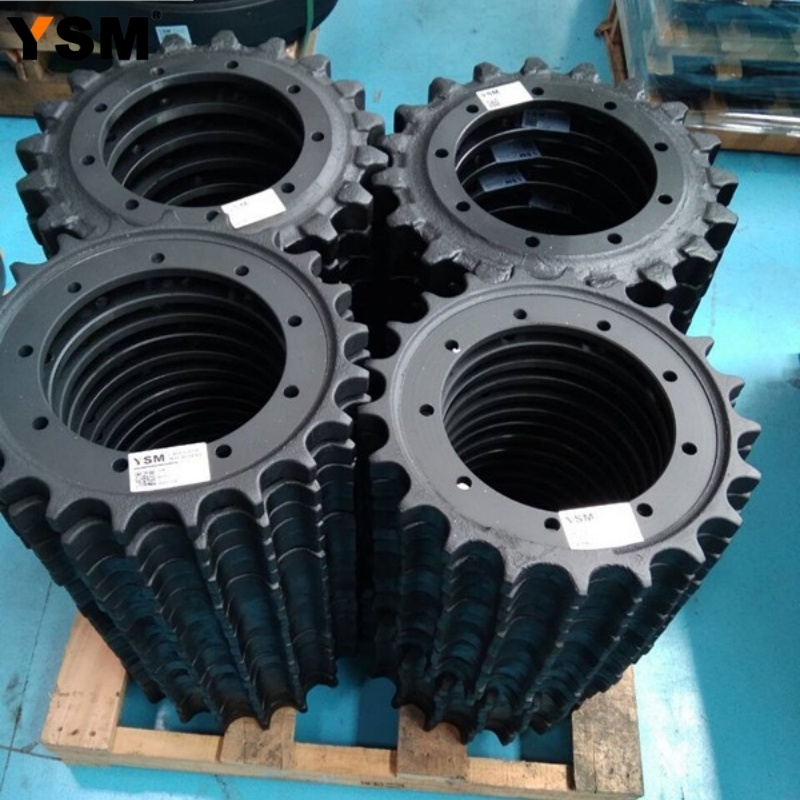
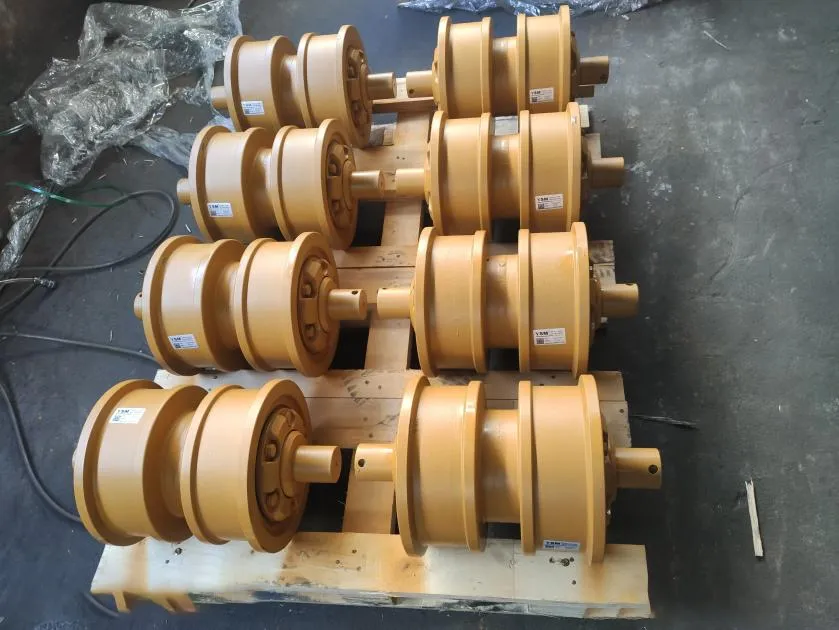
We are a China-based manufacturer and wholesale supplier of construction machinery undercarriage parts. Relevant categories include track rollers, carrier rollers, idlers, sprockets and segments, track chains, track shoes, track groups and related track fasteners for many mainstream bulldozer and excavator applications.
Compatibility and availability must be confirmed before ordering. Please send the machine brand, complete model, serial number or PIN, part name, existing part number, clear photos, requested dimensions, quantity and destination country.
Corporate Email: sales@china-ysm.com
WhatsApp: +86-18606961587
Technical References
- Caterpillar: Dozer Undercarriage Maintenance
- Caterpillar: Undercarriage for Dozers
- Caterpillar: Dozer Undercarriage Maintenance and Management
- Caterpillar: How to Check Dozer Track Tension
- Komatsu: Don't Overlook the Undercarriage
Brand names are used only to identify technical reference sources. This general educational article does not replace the Operation and Maintenance Manual, service information or inspection of a specific machine.