
Track-chain wear and repair decisions
Can You Remove a Track Link to Tighten Excavator Tracks?
Removing a track link to tighten excavator tracks is not a general repair for a loose chain. It shortens the loop but does not restore worn pin-and-bushing pitch, correct sprocket wear, or repair a faulty adjustment system. Before considering any model-approved alteration, establish why the track is loose and whether the installed chain still matches the machine.
1. Loop length and joint pitch are different measurements
Loop length describes the whole chain around the crawler. Joint pitch describes the spacing between successive pin centers under the specified measuring conditions. Removing a section changes the first quantity; it does not renew the remaining joints.
Komatsu explains that internal pin and bushing wear increases chain pitch, while sprocket-tooth wear changes the engagement relationship. A shorter worn chain can therefore still have an unsuitable pitch relationship with its sprocket. Appearance after tightening is not evidence that engagement has been restored.
Keep three questions separate in the inspection report: Is the installed assembly correct? Can the adjustment system achieve and retain the specified setting? Are the chain and mating components within their applicable service criteria?
2. What the loose-track symptoms can and cannot tell you
| Observation | Questions to investigate | What it does not prove |
|---|---|---|
| Sag returns after adjustment | Was the setting measured correctly? Is adjustment being retained? | That one link must be removed |
| Idler appears far forward | What is the permitted position? Is the chain correct and worn? | That the adjuster is at its approved limit |
| Chain lifts or jumps at the sprocket | Pitch, engagement, debris, guidance, and component condition | A single confirmed cause |
| Only one side is loose | Separate settings, wear, repair history, and adjuster condition | That both chains require identical work |
Photograph each symptom before changing the machine. Write down whether the observation was made before cleaning, after adjustment, or after controlled operation. These distinctions make remote technical discussions much more useful.
3. Establish a reliable inspection baseline
Arrange inspection on stable ground with the attachment lowered and the machine secured under its operation and maintenance manual. Do not crawl under an unsupported machine or attempt to release a recoil spring. Track-adjustment components can contain hazardous stored energy.
Clean enough material away to see the relevant surfaces. Use the manual's exact machine positioning, measuring location, and setting conditions. Record the tension measurement and any adjustment rather than reporting only that the track looks loose.
Volvo's inspection guidance specifically recommends checking link count for evidence of a link previously removed in an attempt to tighten the undercarriage. Record the actual count on each side and compare it with the correct parts documentation. Treat an unexplained difference as a question requiring investigation, not an instruction to copy the shorter side.
4. Ask for measurements, not a visual wear percentage
A useful chain report identifies the measuring method, reference span, actual reading, applicable new and service-limit values, and the source of those values. A multi-joint span may be specified for pitch assessment; the exact method must match the installed chain. One casual ruler reading or a supplier photograph is not a complete wear assessment.
Keep internal joint wear separate from external bushing wear and link-rail wear. A chain may have different limiting surfaces. Ask the inspector to identify which measurement supports each recommendation and whether there are local defects as well as general wear.
Request a photograph of the setup, not just the final number. Note dirt, damaged reference surfaces, stiff joints, prior repairs, and measurement uncertainty. Do not convert a raw reading into a wear percentage using a chart for a different chain.
5. Investigate adjustment and guidance before choosing parts
When the setting will not hold, qualified service personnel should investigate the adjustment system using the machine-specific procedure. Record visible leakage, idler movement, reported adjustment history, and any previous repairs. Do not assume a leaking area proves the only fault or that repeatedly adding grease is an acceptable repair.
Also review the sprocket, idlers, rollers, guards, mounting points, and frame condition. Ask whether contact marks, movement, or damaged guidance explain why the chain is not following its intended path. A chain shortened to hide sag does not correct these conditions.
Keep identification evidence attached to the findings. A mixed assembly from an earlier repair may require a different assessment from an original, correctly identified chain with ordinary wear.
6. When could link removal be considered?
Only consider a change to chain length when the exact machine and installed track assembly have an applicable approved repair procedure and a qualified person has assessed the complete system. Confirm the resulting link count, adjustment range, connection arrangement, and acceptance checks. This article does not authorize shortening or provide disassembly instructions.
| Assessment result | Appropriate planning direction |
|---|---|
| Incorrect setting, components otherwise accepted | Correct adjustment under the exact manual and document the result |
| Adjustment-system defect | Repair the confirmed defect and reassess the chain setting |
| Wrong or previously altered chain | Resolve assembly identity and approved specification |
| Worn pitch or unacceptable mating components | Develop a measured replacement or approved overhaul scope |
Do not compare repair quotations only by the number of links removed or supplied. Compare the evidence, included components, installation scope, and final acceptance requirements.
7. What to send with a track-chain inquiry
- Brand, complete model, serial number or PIN, and destination country.
- Chain part number, construction, joint type, and actual link count on each side.
- Shoe width, mounting arrangement, hardware specification, and quantities.
- Measured pitch and other wear readings with their reference method.
- Tension readings, idler position, adjustment history, and observed leakage.
- Photos of joints, sprocket engagement, rollers, idlers, guides, and damaged areas.
- Working surface, typical travel, previous repairs, and the proposed repair scope.
The practical conclusion is simple: identify the cause of excess slack before changing chain length. A documented diagnosis protects the parts decision from becoming a cosmetic correction.
Frequently Asked Questions
Does removing one link fix chain stretch?
No. It reduces loop length but does not reverse wear inside the remaining joints. Confirm pitch and the complete assembly condition.
Does a forward idler prove the chain needs replacement?
No. Its position must be compared with the permitted range, correct chain identity, adjustment condition, and measured wear.
Can the same link count be used for similar excavators?
Do not assume so. Confirm the serial-specific chain group, shoe arrangement, connection, and actual installed assembly.
Should the sprocket be inspected when a chain is replaced?
Yes. Review mating-component condition and compatibility as part of the repair scope; a new chain does not make a worn sprocket suitable.
Technical references
Discuss a Measured Track-Chain Repair Inquiry
We are a China-based manufacturer and wholesale supplier of undercarriage parts. Send the chain identity and inspection findings so our team can review suitable supply options for a defined repair plan, including:
- track chains and link assemblies;
- track shoes, complete track assemblies, bolts, and nuts;
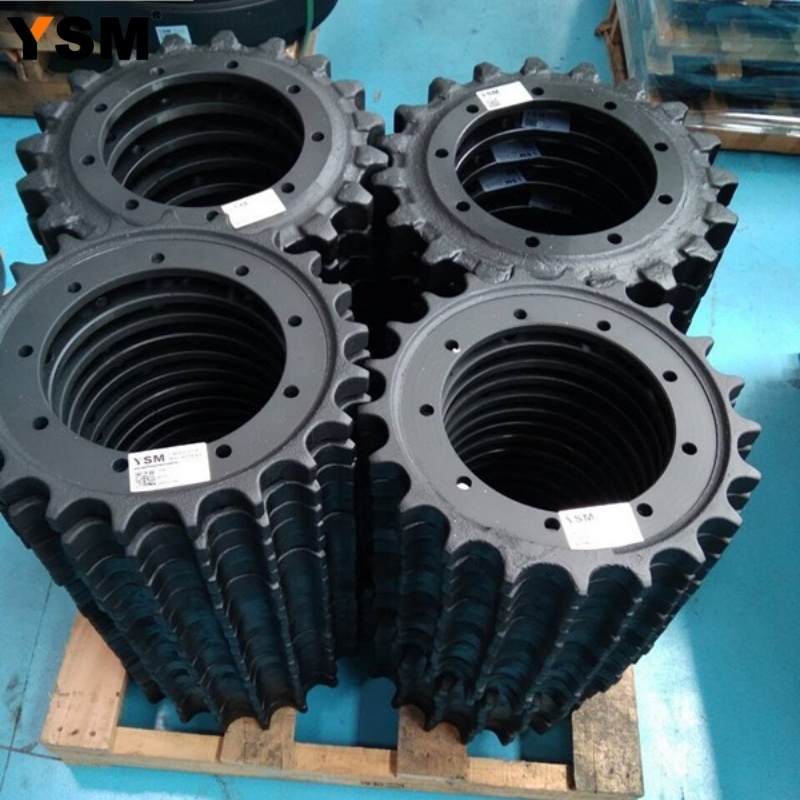
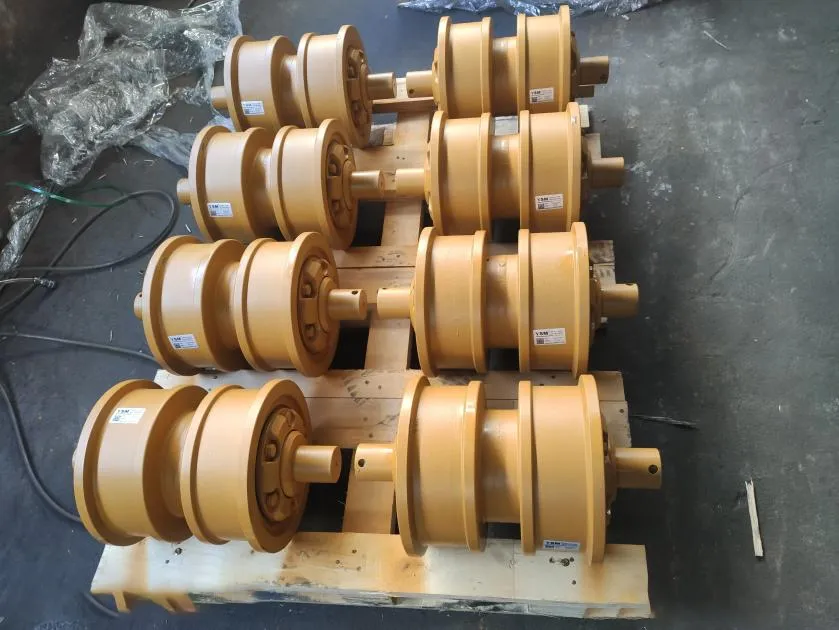
- sprockets, idlers, track rollers, and carrier rollers when required;
Corporate Email: sales@china-ysm.com
WhatsApp: +86-18606961587
Compatibility and availability must be confirmed from the complete model, serial number, part number, clear photos, and requested dimensions before ordering. Include quantity, destination country, and working conditions.