-
-
ApplicationOur products consist of undercarriage parts for bulldozer and excavator such as Track link,Track roller,Carrier roller,Sprocket,ldler,Track shoe,Cutting edge,End bit,Tooth Bucket,Track pin,Track bush, Engine parts,Track boit&nuts.U-bolt,Centre bolt,Wheel bolt and other related parts.

-
About UsFujian Yongsheng Machinery Parts Co., Ltd. is located in Quanzhou City, Fujian Province, which is one of the most developed regions of China Machinery Manufacturing.The company was established in 2003, after approximately 10years' effort, and now it is one of the leading construction machinery parts auto parts manufacturers in CHINA.
-
BlogSuppliers who pass Quality ManagementSystem Certification, and have onsitematerials or finished products inspected,as certified by independent third parties.
Excavator & Bulldozer Undercarriage Guide: Materials, Wear Patterns & Life Extension
Comprehensive guide on excavator and bulldozer undercarriage parts. Learn about track rollers, idlers, sprockets, track chains, wear diagnosis, and cost optimization for fleet procurement.
Jul 08,2026
Excavator & Bulldozer Undercarriage Guide: Materials, Wear Patterns & Life Extension
The undercarriage system represents a major portion of a crawler machine's lifetime maintenance cost. Whether managing a fleet of heavy-duty bulldozers in a mining zone or operating medium excavators on infrastructure projects, understanding undercarriage component construction, material selection, and wear patterns is essential to controlling costs and maximizing machine uptime. This comprehensive excavator undercarriage parts guide breaks down the engineering standards and strategic sourcing factors for procurement managers worldwide.
Here is an overview of high-grade heavy machinery undercarriage components engineered for demanding environments:

Understanding Crawler Undercarriage System Components
A crawler undercarriage is a complex moving assembly that carries immense structural loads while subjected to constant friction, soil abrasion, and shock impacts. The system relies on five foundational components working in unison:
- Track Rollers (Bottom Rollers) & Carrier Rollers (Top Rollers): Support the machine's weight and guide the track movement along the track frame.
- Track Link Assemblies / Track Chains: The continuous rail system that connects the machine's drive system to the ground, containing pins, bushings, and links.
- Front Idler Assembly: Guides the track loop in and out of the roller framework and works with the tensioner system to absorb severe impacts.
- Sprockets & Sprocket Segments: Driven by the final drive travel motor, the teeth engage the track bushings to propel the machine.
- Track Shoes (Track Pads): The broad steel plates bolted to the track chains that provide traction and distribute ground pressure.
Because these components operate interdependently, a single accelerated wear factor on one part can trigger a chain reaction, reducing the operational life of the entire system from a normal 3,000–5,000 hours down to fewer than 1,500 hours.
Manufacturing Technology: Forged vs. Cast Track Rollers
When looking to buy bulldozer track rollers wholesale, understanding the manufacturing method is critical. The structural strength and wear resistance of rollers depend heavily on whether they are forged or cast.
Cast Track Rollers
Process: Liquid steel is poured into a shell mold. This allows for complex outer shell geometry and fast production turnarounds.
- ✓ More affordable initial investment
- ✓ Ideal for mini excavators and light-duty applications
- ✗ Susceptible to micro-porosity and internal structural voids
- ✗ Lower shock load absorption capability
Forged Track Rollers
Process: Solid steel billets are heated and compressed under extreme hydraulic tonnage, forcing the metallic grain structure to align perfectly with the roller's contours.
- ✓ Superior structural density with zero internal voids
- ✓ Maximum resistance to cracking and flange deformation under heavy impact
- ✓ Required for heavy-duty bulldozers (e.g., CAT D6, D8) and large mining excavators
- ✗ Higher initial investment costs
Undercarriage Hardness & Material Specifications
To ensure a long service life, manufacturers utilize precise boron-alloyed and manganese steels combined with advanced induction hardening tech to satisfy stringent undercarriage hardness requirements HRC.
| Component | Standard Steel Grade | Surface Hardness (HRC) | Hardness Depth (mm) | Best Suited Application |
|---|---|---|---|---|
| Track Roller Shell | 40Mn2 / 50Mn Forged | 52 - 58 | 8mm - 12mm | Heavy excavation, rocky terrains |
| Track Link | 35MnB Boron Steel | 50 - 55 | 6mm - 10mm | High-abrasion mining environments |
| Track Pin & Bushing | 20CrMnTi / 40Cr | 55 - 62 | 3mm - 5mm (Carburized) | High-speed tracking, long-distance travel |
| Front Idler Rim | 35# Steel / Cast Mango | 50 - 55 | 5mm - 8mm | Heavy shock absorption, leveling |
| Sprocket Segments | SCSMn1A / 35MnB | 50 - 56 | 10mm - 15mm | High-torque driving, mud evacuation |
Note: Proper depth of induction hardening ensures that as the outer layer wears down over thousands of hours, the internal core remains tough enough to resist structural fractures.
Standard vs. Heavy-Duty Undercarriage Configurations
| Technical Parameter | Standard Undercarriage Parts | Heavy-Duty (HD) Undercarriage | Operational Impact & ROI |
|---|---|---|---|
| Seal Mechanism | Standard Polyurethane Lip Seals | Heavy Duty Dual-Cone Mirror Seals | Prevents oil leaks; extends internal bearing life by up to 60% |
| Track Chain Link Design | Standard Link (Dry/Greased) | Sealed and Lubricated Tracks (SALT) | Drastically reduces internal pin/bushing friction and stretch |
| Bushing Wall Thickness | Standard Thickness | +20% Extra Thick Boron Bushing | Delivers superior resistance to reverse drive wear |
| Track Shoe Profile | Single/Triple Grouser (Standard) | Reinforced High-Grouser Mud-Slit Pads | Maximum traction in swampy, muddy, or slick clay operations |
| Expected Lifespan | Standard Life (2,000 - 3,000 Hours) | HD Life (4,500 - 6,000+ Hours) | Greater initial investment but better total cost of ownership |
Track Chain Wear Patterns Diagnosis
Executing regular track chain wear patterns diagnosis helps maintenance teams fix localized issues before they cause total system destruction.
1. Track Link Elongation (Track Stretch): This is caused by internal wear between the pin and the bushing, increasing the pitch distance. If left unadjusted, it destroys sprocket teeth segment geometry rapidly.
2. Scallop Wear on Link Rails: Deep, wavy wear patterns on top of the links. This indicates the track rollers have lost internal oil or their bearings are shot, causing them to slide instead of roll.
3. Internal Bushing Wear (Snakeskin Pattern): Extreme wear on one side of the bushing surface. Often indicates a track guide frame misalignment or excessive travel in reverse gear.
4. Mirror Seal Leaks: Clear oil weeping from roller shafts or idler hubs. This requires immediate seal replacement before lack of lubrication locks up the entire assembly.
Cost Optimization: Repair vs. Full Replacement Analysis
Evaluating track roller repair vs replacement requires checking structural integrity alongside logistical overheads.
| Scenario | Repair Investment | New Component Investment | Engineering Recommendation |
|---|---|---|---|
| Worn Teeth Only (50% life left) | Minimal | High | Repair; ROI within weeks. |
| Minor Shell Cracking (<200mm) | Moderate | Very High | Repair if overall component life is good. |
| Extensive Shell Damage (>500mm cracks/warping) | Very High | Extreme | Replace; structural integrity compromised. |
| Recurring Failure Points | Moderate | Very High | Repair once, then replace if failure recurs. |
| Multiple Wear Indicators (End-of-Life) | Very High | Extreme | Replace; new investment offers better CPH. |
Cost-Per-Hour (CPH) Assessment: A detailed cost-per-hour analysis is essential. Standard components with lower upfront costs may yield a higher CPH due to shorter lifetimes, while premium heavy-duty components with greater initial investments often deliver significant long-term savings.
OEM vs. Aftermarket Undercarriage Components
Procurement teams regularly weigh the benefits of OEM undercarriage components against high-quality aftermarket alternatives.
OEM Undercarriage Parts (e.g., Caterpillar, Komatsu, Hitachi)
- ✓ Absolute fitment match with factory specifications
- ✓ Long-standing material consistency warranties
- ✓ Peace of mind regarding quality
- ✗ Premium pricing tier (High)
- ✗ Slower logistical supply chains
Premium Aftermarket Undercarriage Components
- ✓ Uses identical steel grades (40Mn2, 35MnB) and HRC case depths
- ✓ Significant cost savings (Good Value)
- ✓ Highly adaptive configurations tailored for custom applications
- ✗ Quality varies significantly among uncertified suppliers
The Strategic Decision: Sourcing from an ISO 9001:2015 certified aftermarket manufacturer delivers OEM-level wear metrics while protecting your operational capital. Avoid "Economy" components with entry-level (Low) pricing, as they sacrifice metallurgy and seal quality, leading to rapid failure and higher total costs.
Multi-Brand Cross-Compatibility Framework
Our heavy-duty track components are built to drop directly into major global heavy equipment platforms:
| Machine Model Series | Track Pitch Standard | Standard Roller Count (Per Side) | Compatibility Notes |
|---|---|---|---|
| Caterpillar 320 Series | 190mm | 7 Bottom / 2 Top Rollers | Direct fitment for standard 320 track chains. |
| Komatsu PC200 Series | 190mm | 7 Bottom / 2 Top Rollers | Interchangeable pitch specs; check link height clearances. |
| Caterpillar D6 Series | 203mm | 6 or 7 HD Rollers | Requires Sealed and Lubricated (SALT) chain variants. |
| Shantui SD16 / SD22 / SD32 | 203mm / 216mm / 228mm | 6 to 8 Forged Rollers | Reinforced flanges required to manage extreme pushing friction. |
Preventive Maintenance Best Practices
Undercarriage Longevity Checklist
- Daily Mud Clean-out: Clean out packed mud, clay, and gravel from the track frame after shifts. Frozen or packed debris stops rollers from spinning, causing flat spots.
- Track Tension Verification: Measure track sag weekly. Tracks that are too tight cause excessive pressure, accelerating pin, bushing, and roller wear by up to 50%.
- Minimize High-Speed Reverse Travel: Reverse travel causes high-friction sliding contact between track links and bushings, doubling wear velocity compared to forward travel.
- Visual Inspections: Regularly check for leaking mirror seals on rollers, missing track shoe bolts, and rock guard cracks.
Premium Heavy Machinery Parts Manufacturing Solutions
We provide comprehensive B2B engineering and manufacturing services for global undercarriage distributors and fleet operations:
- Forged Track Roller Groups: Deep case-hardened shells equipped with high-durability dual-cone mirror seals.
- Sealed & Lubricated Track Chains: Advanced SALT assemblies that keep internal lubricants locked in, achieving excavator undercarriage life extension goals in harsh mining sites.
- Custom Sprocket Segment Groups: Precision-cast or forged tooth profiles engineered for exact multi-brand compatibility.
- High-Quality Track Shoes for Bulldozers: Optimized for extreme traction in specific soil conditions (mining, standard construction, swamp).
All parts undergo strict chemical analysis, ultrasonic testing, and geometric verification before shipment to maintain full ISO 9001:2015 quality compliance.
Conclusion: Lower Your Costs, Secure Your Uptime
Optimizing undercarriage lifespans depends on choosing the correct material specifications for your specific working environments. Avoiding low-grade casting alternatives in heavy rock or high-abrasion environments ensures your operations stay profitable over the long term.
Contact Our Technical Sourcing Engineers
For custom engineering consultations, volume wholesale quotations, or cross-compatibility references:
Email:sales@china-ysm.com
Phone / WhatsApp: +86 18016757808
We help global operators minimize cost-per-hour and optimize heavy equipment fleet performance.
Related Posts
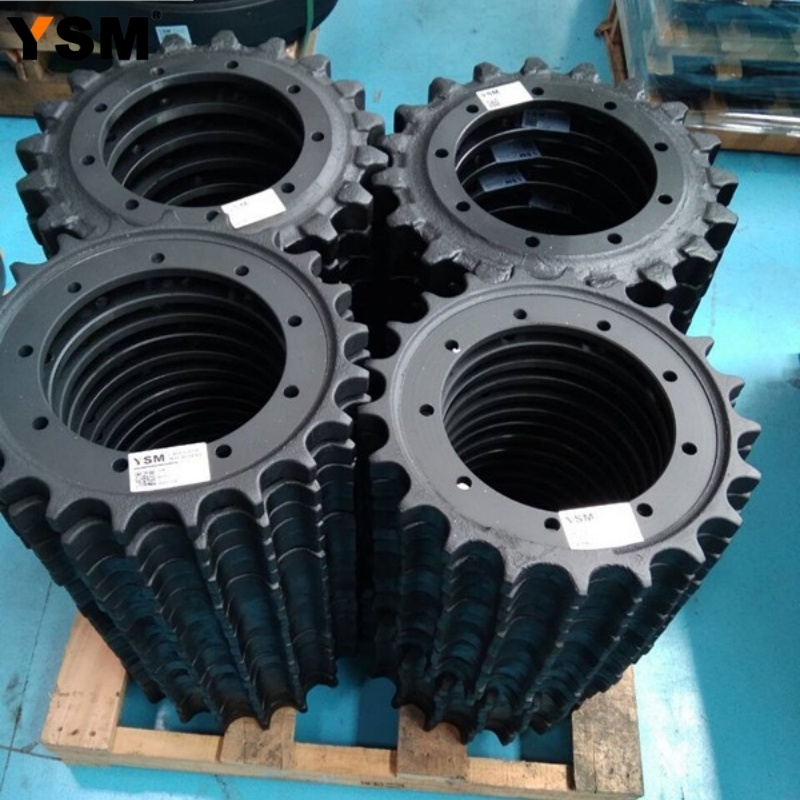
How Should The Supporting Wheels Be Selected To Avoid Stepping On Thunder?
High-quality support wheels mainly depend on the performance of its steel. The material of the roller body is generally 50Mn, 40Mn2, (MN: synonymous with the element of manganese).
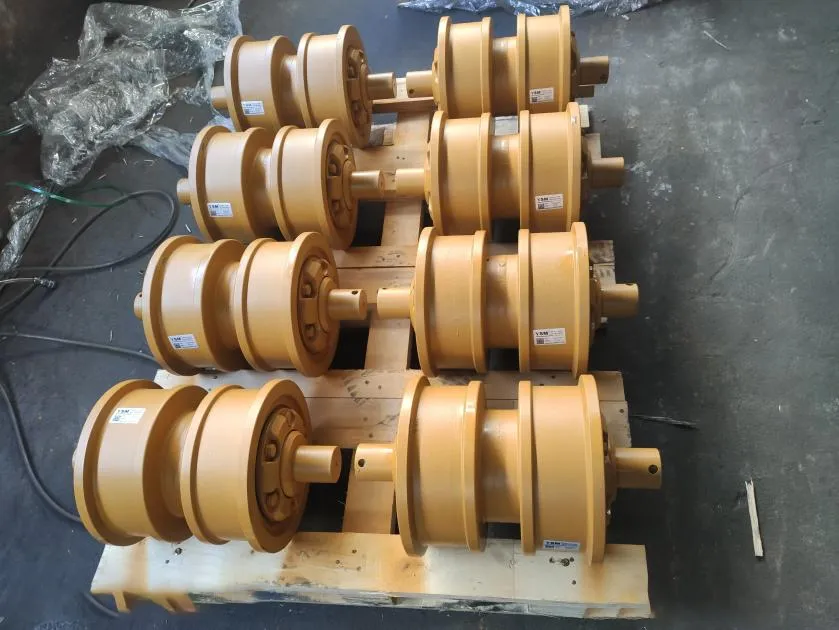
Carrier Wheels Are Suitable For Various Models At Home And Abroad
Sprocket wheels are mainly used in various crawler bulldozers, excavators, pavers, milling machines, rotary drilling rigs or other crawler machinery equipment at home and abroad.
Contact Us
E-mail :
sales@china-ysm.com
Phone/WhatsApp:
+86-18606961587
Address:
No.8 Binjiang Street, Binjiang Industrial Zone, Xiamei Town, Nan An City, Quanzhou City, Fujian Province, China
Request Quote
Andy Shi
No.8 Binjiang Street, Binjiang Industrial Zone, Xiamei Town, Nan An City, Quanzhou City, Fujian Province, China


Request Quote