
Excavator Operating-Condition Maintenance
How Slopes Affect Excavator Undercarriage Wear
Slope work changes how an excavator's weight and side loads pass through the track shoes, chains, rollers, idlers and sprockets. Repeated cross-slope travel, sharp turns, track slip and abrupt grade transitions can create different wear patterns from level-ground work. Safe operation comes first, while regular left-right measurements help separate normal application wear from a developing alignment or component problem.
Quick answer
Excavators working on slopes often load one track or one side of the chain path more heavily. Inspect inner and outer link rails, roller and idler flanges, sprocket contact, shoe edges, bolts, guards and track-frame condition on both sides. Where the machine manual, ground assessment and site plan permit, minimize unnecessary cross-slope travel, abrupt pivot turns and track spinning. Keep the undercarriage clean, maintain model-specific track sag and record measurements instead of replacing parts from appearance alone.
How does slope work change excavator undercarriage loading?
Cross-slope side loading
When a tracked machine travels or works across a slope, gravity encourages the upper structure and undercarriage to move downhill. The chain rails can press more strongly against roller, idler or guide flanges on one side. The downhill track may also carry a different share of the machine load. The exact pattern changes with machine orientation, attachment reach, counterweight, ground shape and whether the upper structure is aligned with the tracks.
Uphill and downhill weight transfer
Travelling along the slope can shift load toward the uphill or downhill end of each track frame. Front rollers and idlers may see a different load pattern from rear rollers and sprockets. Starting, stopping or changing direction can add dynamic load beyond the static weight distribution.
Grade transitions
At a crest, ditch, ramp entrance or sharp change in grade, only part of the track may contact the ground. A shorter effective contact length concentrates load on fewer shoes and rollers. Striking the transition at an angle can add twisting and shoe-edge loading.
Track slip and recovery movements
If a track slips or spins, the sprocket, bushings, grousers and ground surface experience repeated relative motion. Aggressive counter-rotation or attempts to force the machine out of soft ground can add side load and disturb material around the track frame.
Material migration and packing
Loose soil may move downhill into the lower side of the undercarriage. Mud or clay can pack differently between the two tracks, changing effective tension and contact. A machine can therefore develop an apparent tension difference even if both sides were adjusted correctly before work.
Which undercarriage components show slope-related wear?
| Component | Slope-related loading or contact | Inspection focus |
|---|---|---|
| Track shoes and grousers | Edge loading, slipping, turning and partial ground contact | Inner/outer edge wear, bent plates, cracks, grouser profile and loose hardware |
| Track chains and link rails | Side thrust, twisting and uneven roller contact | Rail height, inner/outer side wear, pitch, dry joints and left-right difference |
| Bottom track rollers | Unequal load sharing and repeated flange contact | Tread diameter, flange wear, leakage, alignment, heat and front-to-rear pattern |
| Carrier rollers | Upper-chain side movement and material packing | Tread and flange profile, leakage, rotation and uneven upper-run contact |
| Front idlers | Chain guidance under side load and changing track tension | Tread, flanges, leakage, alignment, slide wear and adjuster travel |
| Sprockets or segments | Uneven chain engagement, slipping and directional loading | Tooth profile, pocket contact, cracks, hardware and comparison between sides |
| Track guards and frame | Chain rubbing, impact and twisting loads | Bending, cracks, polished contact marks, missing bolts and clearances |
| Track adjuster and recoil unit | Changing packing pressure, shock and repeated tension correction | Grease leakage, travel, alignment and restricted movement |
Slope operation does not produce one universal pattern. A downhill inner rail may wear faster in one application, while repeated turns or a misaligned frame may reverse the visual result. Use the site's operating history when interpreting the marks.
Wear patterns that deserve closer inspection
| Observed pattern | Possible inspection areas | Why confirmation is needed |
|---|---|---|
| One track wears faster than the other | Slope direction, travel route, chain pitch, roller diameters, idler, sprocket and final-drive performance | Unequal application load can resemble a mechanical fault |
| Inner rail or flange wear is stronger | Cross-slope travel, alignment, guards, idler position and roller flanges | Contact marks show where rubbing occurred, not the complete cause |
| Outer shoe edges bend or crack | Shoe width, edge loading, rock contact, turning and loose bolts | Ground impact and unsuitable shoe choice may overlap |
| Front rollers or idler wear faster | Travel direction, grade transitions, track sag and digging orientation | Normal duty pattern must be compared with limits and the opposite side |
| Frequent track tightening is required | Material packing, chain pitch, adjuster leakage and measurement condition | Sag changes do not identify one failed part |
| Machine pulls or tracks differently on level ground | Undercarriage wear, track tension, travel motors, hydraulic performance and braking | A level-ground test and professional diagnosis may be required |
Inspection checklist after repeated slope work
- Record the work pattern. Note common slope direction, surface, travel distance, turning direction and attachments.
- Park on safe level ground. Lower the attachment, isolate the machine and allow hot parts to cool.
- Clean both undercarriages. Remove packed material so the two sides can be compared fairly.
- Take full-side photographs. Use the same camera angle for the left and right tracks.
- Check shoes and fasteners. Look for edge bending, cracks, missing bolts and movement at bolt seats.
- Inspect link rails and joints. Compare inner/outer rail contact, side wear, pitch and dry joints.
- Inspect rollers and idlers. Look for leakage, flange rubbing, flat areas, heat, noise and uneven diameters.
- Inspect sprocket engagement. Compare tooth and bushing contact on both sides.
- Inspect frame, guards and adjuster. Check cracks, rubbing marks, bending, grease leakage and travel.
- Measure and record. Use model-specific service data and retain the results for trend comparison.
Operating habits that influence slope-related wear
Safe operating instructions for the exact excavator take priority. Within those limits, the following general habits can reduce unnecessary undercarriage disturbance:
- plan access routes and working pads before production starts;
- where permitted, minimize unnecessary travel across the fall line;
- use gradual directional changes instead of repeated stationary pivot turns;
- avoid track spinning and forcing the machine after traction is lost;
- cross grade transitions in the orientation specified by the manual and site plan;
- keep travel speed appropriate for the surface and slope;
- avoid striking hidden rocks, stumps, berms or trench edges with one track;
- change the work plan if the machine repeatedly slides or cannot maintain a stable platform.
Do not turn these wear-reduction principles into permission to operate on an unsafe slope. Ground bearing capacity, stability, visibility, machine configuration and emergency access must be assessed separately.
Track tension and cleaning on sloped jobsites
Track sag should be checked in the condition and by the method specified for the exact machine. Too-tight tracks increase friction and component loads; too-loose tracks can increase impact and derailment risk. Packed mud can tighten a track during work, while loose material may fall away after the machine reaches level ground. Record the measuring condition so the result is meaningful.
Clean the track frames, upper chain runs, sprocket pockets, rollers, idlers and adjuster access areas. Avoid directing damaging high-pressure water at seals. In freezing conditions, remove water-holding material before shutdown according to the machine's maintenance guidance.
Best practice: compare four directions
Record left versus right, inner versus outer, front versus rear and current versus previous inspection. A single close-up can show damage, but these four comparisons reveal whether wear follows the slope application, a travel habit or a component alignment problem.
How to measure uneven undercarriage wear
A professional inspection may include chain pitch, link-rail height, bushing outside wear, sprocket profile, roller and idler tread dimensions, flange condition and grouser height. Use the OEM wear chart or inspection system for the exact model and component.
Use consistent tools and locations. Label each measurement by side and position—for example, left front roller, left middle roller and right front roller—rather than recording only an average. An average can hide one seized roller or a localized flange problem.
Do not use universal percentage thresholds from a different machine. Component geometry, measuring direction and service limits vary. When readings approach the relevant limit or the left-right difference grows quickly, arrange a qualified inspection.
When should operation stop for inspection?
Stop in a safe location and request qualified support if the machine cannot remain stable, the track repeatedly derails, a shoe or link is cracked, hardware is missing, a roller or idler is seized, the frame is damaged, fresh lubricant loss is severe, or new grinding, impact or vibration appears during travel. Also stop if the machine behaves differently after returning to level ground.
Do not attempt heavy-component removal or track adjustment on a slope. Stored grease pressure, machine weight and unstable ground add risk to work that already requires controlled service procedures.
Parts planning and fitment information
If measurements show that parts need attention, inspect mating components before defining the order. A new roller cannot correct a bent frame, and a new chain may engage poorly with a severely worn sprocket.
Prepare the following information:
- machine brand, complete model, suffix and serial number or PIN;
- nameplate photo and current operating hours;
- part names, positions and part numbers where available;
- full left and right undercarriage photographs;
- close photographs of uneven wear, leaks and contact marks;
- track pitch, link count, shoe width and requested dimensions;
- inspection measurements and applicable service limits;
- slope, soil, attachment, travel and turning conditions;
- quantity and destination country.
Compatibility and availability must be confirmed from the complete model, serial number, part number, clear photos and requested dimensions before ordering.
Related undercarriage parts that can be checked
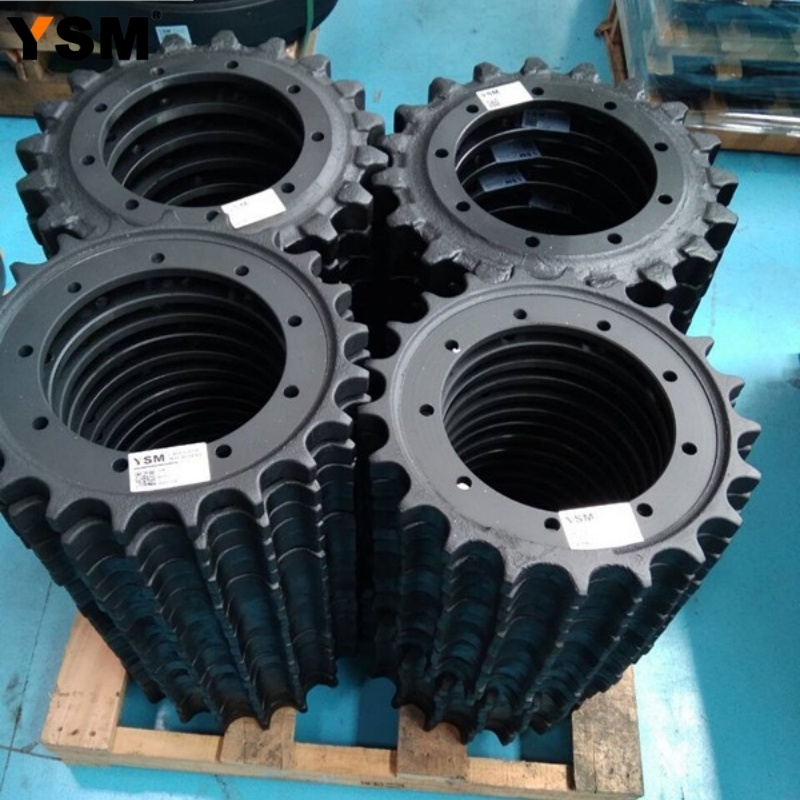
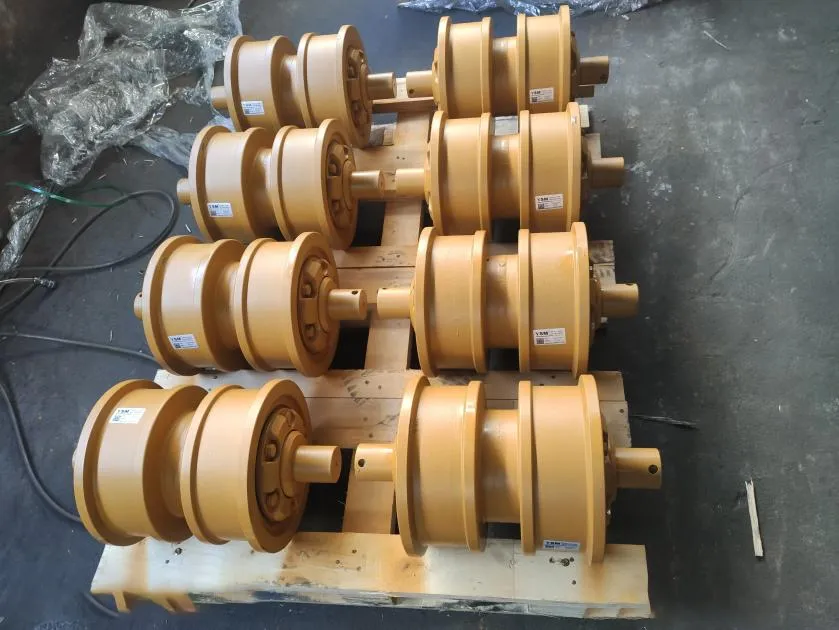
For suitable excavator and bulldozer applications, our team can check track rollers, carrier rollers, front idlers, sprockets or segments, track chains, track shoes, complete track groups and related track fasteners. The supply scope should follow measured wear and fitment data, not an assumption that all parts require replacement together.
Frequently Asked Questions
Does working on a slope always cause uneven undercarriage wear?
Not always, but slopes change load distribution and side contact. The result depends on orientation, ground, turning, travel distance, machine configuration and maintenance. Measurements are needed to distinguish normal application wear from a fault.
Why does the downhill track sometimes wear faster?
The downhill side may carry different load and side thrust during cross-slope work. However, turning direction, chain tension, alignment and previous repairs can produce a different pattern, so inspect both sides completely.
Is travelling straight up and down a slope always permitted?
No universal instruction applies to every excavator and site. Use the exact machine manual, slope limits, ground assessment and approved site method. General wear guidance never overrides stability and safety requirements.
Can track tension be adjusted on the slope?
Track adjustment involves stored pressure and must follow the approved service position and procedure. Move the machine to a safe maintenance location and use qualified personnel.
Which parts should be measured after slope work?
Common measurements include chain pitch, rail height, roller and idler tread dimensions, flange wear, sprocket profile and grouser height. The exact points and limits come from the correct service data.
Should both sides be replaced if one side is more worn?
Not automatically. Compare measurements, mating parts, application and future use. Balanced performance matters, but the repair scope should be evidence-based and model-specific.
Technical references
- Caterpillar: Undercarriage for Excavators
- Caterpillar: Operating Tracked Equipment on Slopes and Transitions
- Caterpillar: Undercarriage Maintenance and Management
- Volvo Construction Equipment: Inspecting Used Equipment Components
- Hitachi Construction Machinery: Undercarriage 101
These sources support general slope-loading, operating-condition and undercarriage-inspection principles. Use the exact machine manual and approved site method for safe slope operation, settings, measuring points and service limits.
Consult Our Excavator and Bulldozer Undercarriage Parts Team
For slope-related uneven wear, we can help check suitable track rollers, carrier rollers, front idlers, sprockets or segments, track chains, track shoes, complete track groups and related track fasteners for many mainstream applications.
Corporate Email: sales@china-ysm.com
WhatsApp: +86-18606961587
Please send the machine brand, complete model, serial number or nameplate photo, part number, full left and right undercarriage photos, measured wear, requested dimensions, operating conditions, quantity and destination country. Compatibility and availability must be confirmed before ordering.