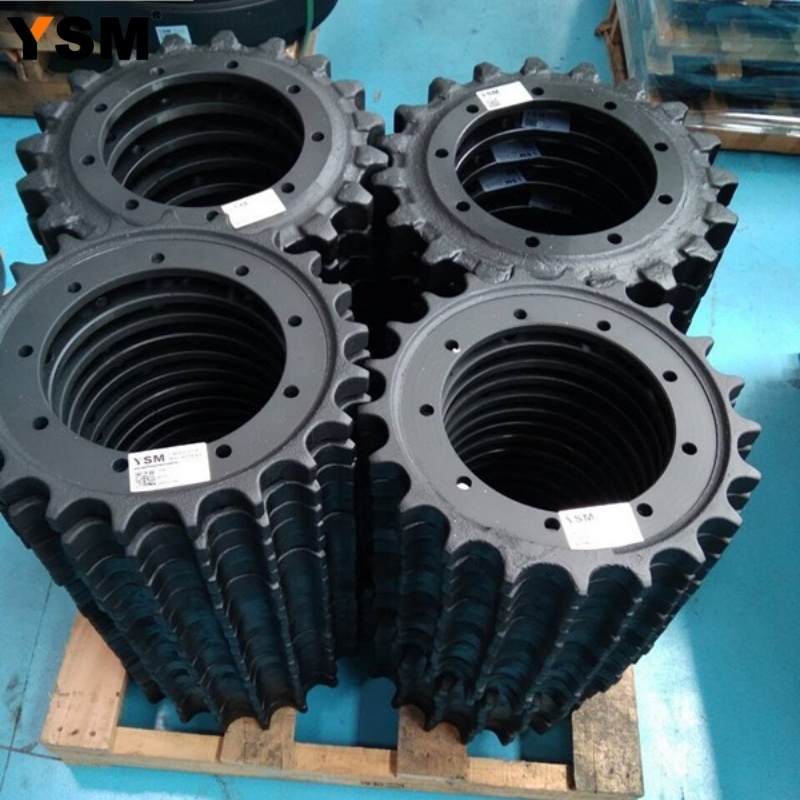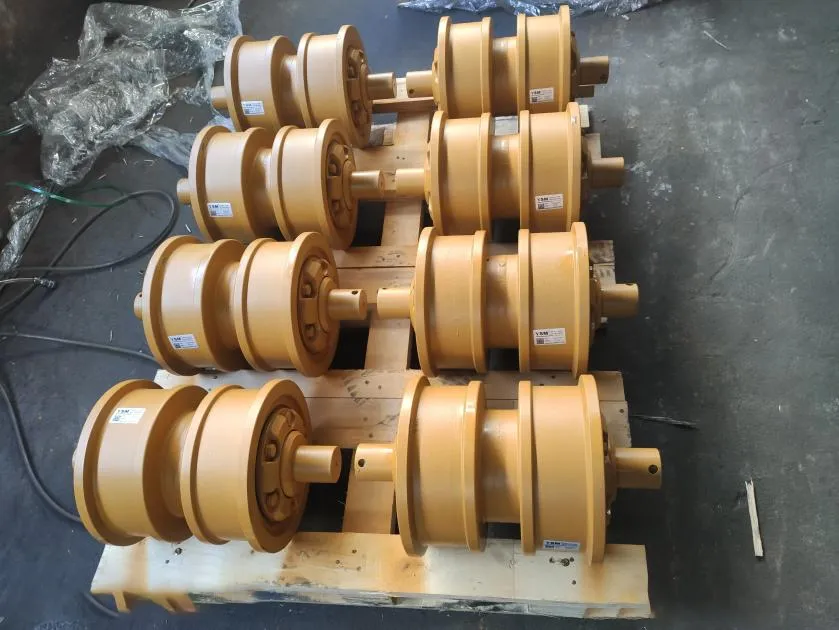

Crawler excavator inspection and parts identification
John Deere 210 P-Tier Undercarriage Inspection and Parts Guide
A John Deere 210 P-Tier undercarriage inspection starts with the machine identification, not a parts list copied from another 210. Published specifications describe particular configurations, while regional builds, production changes, shoe options, and previous repairs can affect what is installed. Check the actual crawler system before requesting rollers, chains, idlers, sprockets, or shoes.
1. Identify the exact John Deere 210 P-Tier
Record the full model designation, serial number or PIN, market, and application. Keep every character of the plate number. Add photos of the full machine and any option or component markings that help establish its build.
John Deere currently maintains 210 P-Tier product information and lists the model in its excavator range. Its available ME210PAU brochure describes a specific North American configuration. Do not use the model name alone to assume compatibility with a 210G, another P-Tier machine, or a different regional or production configuration.
This independent educational article is not affiliated with or endorsed by John Deere. Brand and model names identify the equipment under discussion.
2. Use published crawler data as a reference
The ME210PAU brochure lists eight lower track rollers, two carrier rollers, and 49 triple semi-grouser shoes per side for the described 210 P-Tier. It identifies hydraulic track adjustment and a sealed and lubricated chain, with 600 mm, 700 mm, and 800 mm shoe options.
These details describe that publication's configuration. Current regional pages do not all show the same crawler figures, and published pages may cover different builds. Count the installed components and use the applicable serial-specific catalog before purchasing.
| Record | Why it matters | Evidence to collect |
|---|---|---|
| Lower-roller sequence | Flange type and mounting may vary by position or group | Count and label every position on both sides |
| Chain and master connection | Determines pitch, link profile, seals, and shoe interface | Markings, pitch span, link count, connection photos |
| Shoe choice | Affects flotation, leverage, hardware, and ground clearance | Width, profile, hole pattern, and part number |
| Guides and guards | Installed options affect chain contact and inspection access | Overall and close mounting photos |
3. Inspect the complete 210 P-Tier undercarriage
Park on firm, level ground, lower the attachment, stop the engine, and isolate stored energy as the correct operator's manual requires. Remove enough debris to see the components. Never enter a pinch point or work beneath a machine supported only by its attachment.
Chain, links, pins, bushings, and shoes
Look for cracked links, shifted pins, stiff articulation, seal loss, rail-height differences, uneven side contact, damaged master connections, bent shoes, missing fasteners, and elongated bolt holes. Record pitch measurements using the method specified for the installed chain. A generic percentage or shoe count does not identify its part number.
Track rollers and carrier rollers
Inspect each position for active leakage, shell cracks, flat areas, mounting movement, unusual flange contact, or signs of restricted rotation. Compare front, middle, rear, and opposite-side condition. Label the flange arrangement before removing parts so the installed sequence remains traceable.
Idler, adjuster, and guides
Check tread and flange wear, guide contact, visible side movement, mounting damage, grease leakage, and debris packing. Record idler position within the frame and whether track adjustment remains stable. Adjuster and recoil work requires the approved service procedure because stored energy remains a hazard after shutdown.
Sprocket and track frame
Inspect tooth profile, cracking, hardware, chain engagement, guard rubbing, welds, brackets, and bright contact marks. Evaluate the sprocket with the chain; replacing one component cannot correct worn mating geometry, a damaged mount, or a distorted frame.
4. Follow the wear pattern to the next inspection
| Finding | Possible contributors | Next evidence |
|---|---|---|
| One side wears faster | Turning pattern, slopes, packing, tension, or alignment | Comparable left-right readings and operating history |
| Strong flange contact | Side loading, guide position, rail wear, or frame condition | Contact photos, roller sequence, and guide clearances |
| Upper chain rubbing | Carrier-roller condition, chain wear, packing, or adjustment | Both upper rollers, pitch, and correct sag measurement |
| Rough sprocket engagement | Tooth wear, elongated pitch, stiff joints, or debris | Chain and sprocket measurements together |
| Adjustment changes repeatedly | Leakage, packing, worn chain, valve issue, or adjuster damage | Repeat the exact manual method and obtain service assessment |
A visible symptom directs the investigation. It does not establish which component failed first. Keep the measurements, working conditions, and repair history with the photos.
5. Keep checks repeatable between inspections
Use the correct 210 P-Tier manual for track tension, fastener settings, lubrication, inspection intervals, and component limits. No single sag value applies to every crawler configuration or measurement position.
Remove packed debris before measuring. Keep dated records of chain pitch, rail and roller condition, idler position, sprocket wear, shoe damage, and leaks. Compare the same positions and reference points each time. Record any change in shoe width, duty, ground material, travel distance, or turning practice.
Caterpillar's general excavator guidance supports checks of joints, hardware, sprockets, and shoe fasteners. Those are inspection principles rather than John Deere service settings. Use the Deere information for every machine-specific adjustment.
Stop production operation for a cracked structural component, separating chain, loose major mounting, repeated derailment, or another condition that the manual or qualified inspector identifies as unsafe. Do not repeatedly tighten a track to conceal a guidance or adjuster problem.
6. Prepare a 210 P-Tier undercarriage parts inquiry
- Complete model, serial number or PIN, market, application, and machine-plate photo.
- Part name, installed side and position, quantity, and readable part markings.
- Actual link, shoe, lower-roller, and carrier-roller counts.
- Shoe width, grouser profile, mounting-hole pattern, and hardware details.
- Roller flange type, bolt centers, bracket or shaft features, and offsets.
- Chain pitch, link profile, master connection, and measured wear span.
- Overall, end, mounting-face, and installed-position photos.
- Failure symptom, previous repairs, working conditions, and destination country.
Label the measurements using an agreed drawing. Ask whether bolts, nuts, brackets, or seals are supplied separately. Verify a proposed cross-reference before ordering, especially when older and newer listings use the same shortened model name.
Frequently Asked Questions
How many rollers does a 210 P-Tier have?
ME210PAU lists eight lower rollers and two carrier rollers per side for its described configuration. Confirm the actual machine and serial-specific catalog because published regional and build information can differ.
Will a 210G roller fit a 210 P-Tier?
Do not assume so. Confirm part numbers, serial applicability, mounting dimensions, offsets, and flange design for both components.
Are all 210 P-Tier track shoes the same width?
No. The cited brochure lists several shoe widths. Measure the installed shoe and confirm the mounting pattern, chain group, and application.
Can one roller be replaced without changing the chain?
It depends on the roller defect, chain and mating wear, mounting condition, and service assessment. Inspect the system before deciding the repair scope.
Technical references
Check John Deere 210 P-Tier Undercarriage Supply Options
Our China-based manufacturing and wholesale supply team can review the requested undercarriage items after receiving the complete machine identity and installed-part evidence. Send the inspection findings with the inquiry.
- track rollers and carrier rollers;
- front idlers and sprockets;
- track chains, shoes, assemblies, and related fasteners;
Corporate Email: sales@china-ysm.com
WhatsApp: +86-18606961587
Compatibility and availability must be confirmed from the complete model, serial number, part number, clear photos, and requested dimensions before ordering. Include quantity, destination country, and working conditions.