
Waste handling | Crawler dozer undercarriage
Landfill Dozer Undercarriage Maintenance for Wire and Packed Waste
A landfill dozer does more than travel over abrasive ground. Wire, plastic film, textiles, compacted refuse and fine debris can wrap around shafts, block rollers, collect behind guards and change apparent track tension. Effective maintenance depends on frequent controlled cleaning, careful exposure management and a repeatable undercarriage inspection rather than waiting for material to become tightly wound.
Why Landfill Work Is Different for a Dozer Undercarriage
Ordinary soil can pack around a dozer track, but most soil does not behave like a long strand of wire or plastic film. Flexible waste can enter the moving undercarriage, wrap around a rotating area and tighten with each movement. Hard objects may then become trapped inside the wrapped material.
Fine waste and mud can build on top of the track frame and stop a carrier roller from turning. Compacted material in the sprocket root or idler area can alter engagement and apparent tension. Sharp metal may damage seals or hoses, while debris behind an underguard can block drainage and hide leaks. One side may collect more material because of travel direction, windrow position or repeated turning.
Waste-handler dozers may use additional guarding, sealed engine compartments, raised clearances or track shoes designed to improve cleanout and compaction. These features help manage the application but do not eliminate inspection. A standard dozer and a factory waste-handler package may require different cleaning access, PPE and component identification.
Build a Controlled Landfill Undercarriage Cleaning Plan
Do not choose the cleaning location only after a breakdown. Establish a pad away from active tipping, traffic, fire zones and unstable waste. The pad should support the machine, contain removed debris and wash water where used, and provide safe access, lighting and collection containers.
The site plan should define who isolates the dozer, who evaluates the waste, what tools are approved, where removed material goes and when maintenance personnel must stop. Required PPE may include eye and face protection, cut-resistant gloves, protective clothing, safety footwear and respiratory protection selected through the site's risk assessment.
Before cleaning
- Photograph both sides and mark visible wire, film, leakage or displaced guards.
- Park on stable level ground, lower the blade and ripper, apply parking controls, stop the engine and isolate energy.
- Check for smoke, heat, leaking containers, chemical odor, sharp protrusions or other site-defined hazards.
- Confirm that removed debris can be contained immediately rather than left beside the machine.
Cleaning sequence
Start with loose debris on top of the frame and around accessible outer areas. Use long-handled tools to maintain distance. Clear the carrier roller area, roller guards, idler pocket and sprocket region in a consistent order. Wash packed mud only when the OEM procedure and landfill environmental controls permit it. Do not direct concentrated pressure at seals, pins, electrical connections or service-sensitive points.
Remove Wire and Film Without Creating a New Hazard
Wrapped material may contain stored tension. Cutting one strand can release another or allow a hidden object to fall. Never pull wire with the track, blade or another moving machine. Never ask an operator to rotate the track while a person stands close to guide the debris.
- Expose only what can be reached safely: do not remove guards casually to gain access.
- Control both ends: use approved tools so cut wire does not spring toward the technician.
- Work in short sections: place each removed piece directly in a rigid container.
- Inspect behind the material: look for polished contact marks, cut seals, damaged hoses, missing bolts and oil leakage.
- Escalate hidden wrapping: material behind the sprocket, final-drive guard, recoil area or heavy underguard may require qualified disassembly.
Plastic film can be deceptive. A thin layer may hide wire or metal strap beneath it. It can also melt or harden near a hot surface. Treat mixed wrapping as unidentified until the site confirms its composition and removal method.
Landfill Dozer Undercarriage Component Checks
| Component | Inspection after cleaning | Why it matters |
|---|---|---|
| Track shoes and hardware | Cracks, bent shoes, loose or missing bolts, blocked cleanout openings and embedded sharp material | Compaction loads, impact and loose hardware can produce different but overlapping damage |
| Links, pins and bushings | Stiff joints, seal-area cuts, abnormal pitch, rail wear and wrapped fibers | External debris may affect articulation, but internal wear requires measurement |
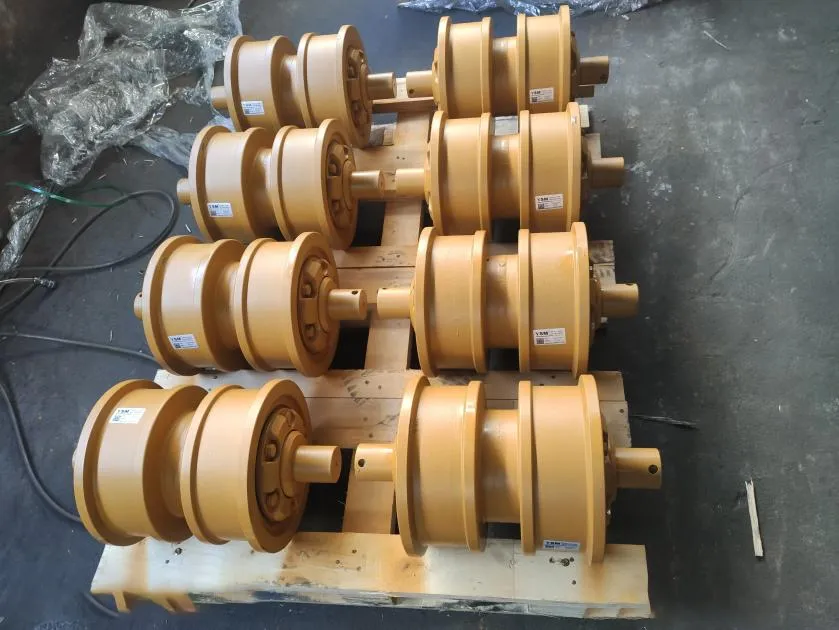
| Lower rollers | Oil leakage, seized rotation, flange wear, shell damage and wire behind guards | A blocked or leaking roller can transfer additional load to neighboring components |
| Carrier rollers | Waste accumulated on the frame, leakage and upper-chain sliding marks | A roller blocked by debris may stop rotating while the chain slides across it |
| Front idler and recoil area | Restricted movement, leakage, guide wear and compressed waste in the pocket | The recoil system contains stored energy; external cleaning is not permission to dismantle it |
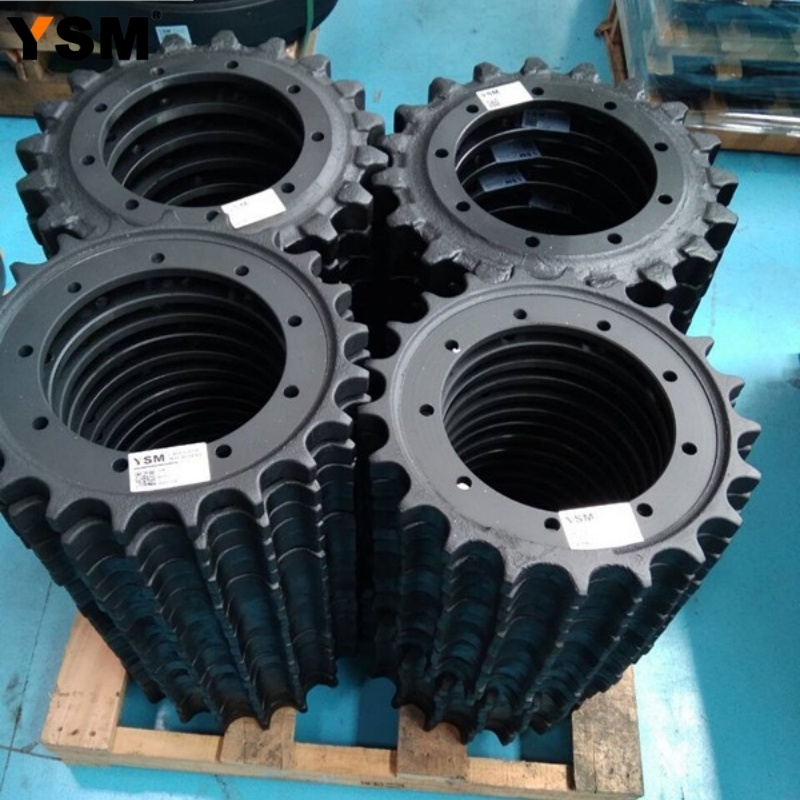
| Sprocket and segments | Wire at the hub or roots, tooth-profile change, cracks, loose hardware and abnormal engagement | Chain pitch, bushing condition, packing and sprocket wear must be evaluated together |
| Frames, guards and underguards | Trapped debris, blocked drains, bent plates, cracked welds and insecure fasteners | Protection may hide accumulation and damage; use approved access procedures |
Cleaned photographs should include the same locations on both sides. Do not label every dark wet area as an oil leak. Dry and recheck. Likewise, fresh paint or a new guard does not prove the frame and mounting points are undamaged.
Track Tension and Packed Waste
Packed material occupies space inside the track loop and can make a track appear tighter. Wire or film may pull material toward the sprocket and idler. Measuring before cleaning can produce a misleading result, and adjusting against that result may create a second problem.
Remove contamination from the specified measurement area, place the machine in the condition required by its manual, and use the exact reference points. Never borrow a sag dimension from another dozer or a generic online chart. Waste-handler packages, roller arrangements, shoe designs and undercarriage types may differ.
If tension remains abnormal after cleaning, inspect for adjuster leakage, restricted recoil movement, chain wear, idler position, alignment and measurement error. Releasing track-adjuster grease involves stored pressure and must follow the approved procedure. A track that will not relax is not a reason to improvise.
Waste-Handler Configuration and Operating Habits
Some purpose-built landfill dozers provide more clearance between the track shoes and machine, perforated or cleanout-oriented shoes, additional sealing and accessible underguards. Record whether the machine has a factory package, dealer-installed kit or site modification. Replacement parts must match the installed configuration rather than a model name alone.
Machine operation influences debris entry. Reduce unnecessary high-speed travel and repeated reverse travel. Avoid track spin and aggressive counter-rotation where the work allows. Alternate turning direction instead of loading one side all shift. Keep windrows and pushing routes arranged so the machine does not repeatedly drag long strands toward the same sprocket.
Do not use a landfill blade or track to deliberately break unidentified containers. Maintain the designated working face and avoid hot loads or smoking areas. If the dozer crosses material that visibly wraps or punctures the track area, move to the approved inspection pad before the material tightens further.
Wear Tracking and Repair Decisions
Record machine hours, work cell, waste type, weather, cleaning completed, wrap locations and operator observations. Use a simple undercarriage map to mark repeated wire accumulation, leaking rollers, damaged guards and shoe failures. A pattern tied to one route or waste stream may support an operational correction as well as a repair.
Qualified wear measurement may include link pitch, rail height, bushing diameter, roller and idler treads, grouser height and sprocket profile. Use the machine-specific new dimensions, limits and tool method. Do not claim a precise remaining life from one visual inspection or from a chart for a different undercarriage.
Plan replacement as a system. New chains may not engage correctly with severely worn sprockets. A new carrier roller will not prevent waste from accumulating if the cleaning route remains blocked. A repaired guard must have sound mounts and approved clearance from moving parts.
Landfill Dozer Undercarriage Parts Fitment Checklist
Before requesting rollers, idlers, sprocket segments, chains, shoes, bolts, guards or related parts, provide:
- brand, complete model and all suffixes;
- serial number or PIN and a clear nameplate photograph;
- factory waste-handler, dealer kit or modified configuration;
- part name, quantity and any readable part number;
- left-side, right-side, mounting and damaged-area photographs after cleaning;
- requested dimensions and the agreed measurement method;
- shoe width, link count, track gauge and cleanout design where relevant;
- working material, application and destination country.
Do not assume every waste-handler component fits the base dozer or that two machines with the same general model share identical guards and shoes. Serial range and installed options must be checked before ordering.
Frequently Asked Questions
Can wire be removed by slowly rotating the track?
Not with a person nearby. Park, lower attachments, isolate the machine and use the approved removal plan. Hidden wire can tighten or release unpredictably.
Should the undercarriage be cleaned only at the end of the day?
No universal interval applies. High-wrapping waste may require inspection and cleaning several times during a shift. Set frequency from the actual waste stream, OEM guidance and site risk assessment.
Are waste-handler track shoes interchangeable with standard shoes?
Not automatically. Width, bolt pattern, pitch, cleanout openings and intended compaction may differ. Confirm the complete configuration.
Does packed waste always mean the track is too tight?
It can change apparent tension, but the correct value must be measured after cleaning by the exact manual method. Do not diagnose the adjuster from appearance alone.
What should be done if smoke appears near the track?
Stop, isolate the area and follow the landfill fire-response plan. Do not continue cleaning or drive the machine through the site without authorization.
Technical References
- Caterpillar: Dozer Undercarriage Maintenance - daily component checks, debris removal and operating context.
- Caterpillar: Top Dozer Maintenance Tips - cleaning, track tension and operating habits.
- Komatsu D85EX/PX-18 Waste Handler brochure - cleanout clearance, underguard access and waste-handler configuration.
- Komatsu D155AX-8 Waste Handler brochure - waste-handler maintenance and system configuration context.
This general article does not replace the exact machine manual, landfill safety plan, environmental controls or qualified inspection.
Ask About Dozer Undercarriage Parts for Landfill Work
We can check suitable supply options for track rollers, carrier rollers, front idlers, sprocket segments, track chains, track shoes, bolts and related undercarriage parts after reviewing the exact dozer and waste-handling configuration.
Corporate Email: sales@china-ysm.com
WhatsApp: +86-18606961587
For a fitment check, send the equipment brand, complete model and suffix, serial number or PIN, part name, part number, clear photos, requested dimensions, quantity, destination country and working condition. Compatibility and availability must be confirmed before ordering.